

780km on a barge: a tiny herd of Angus restores family legacy on Lord Howe Island
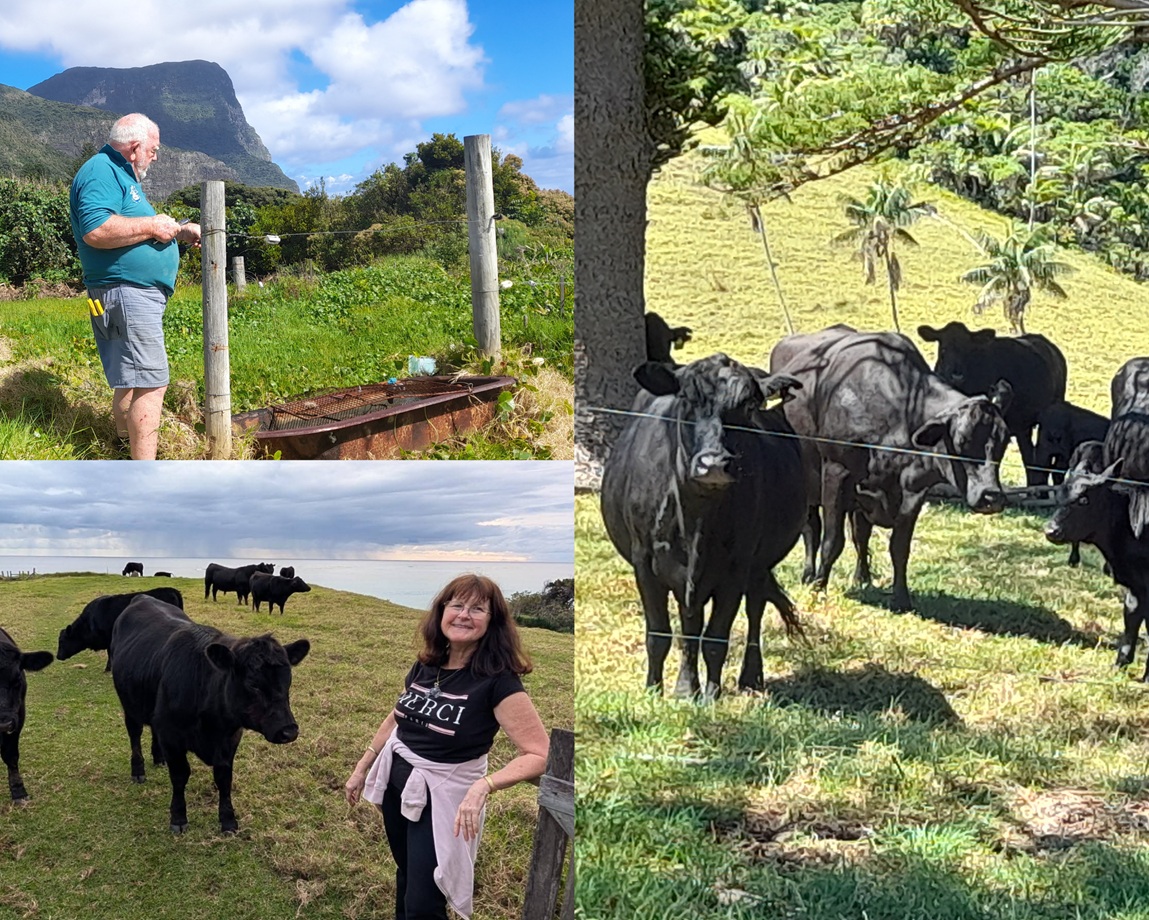
The herd grazes about 12 hectares of coastal land on Lord Howe Island and keeping fences in good repair has been a challenge for the late Esven Fenton (top left) and daughter Leanne Stewart (bottom left) and her husband. Pictures supplied
Angus cows peacefully grazing under towering basalt cliffs are again part of daily life on Lord Howe Island, thanks to a small, carefully managed herd that owes its existence to one man's determination and a barge-load of Macka's genetics.
Fourth-generation islander and third-generation cattleman Esven Fenton had built up his beef herd across 30 years from animals already on Lord Howe.
But that herd was wiped out when the Lord Howe Island Rodent Eradication Project required most stock to be destroyed ahead of aerial baiting in 2019.
REPELLING INVADERS
The project was a last-ditch attempt to halt ecological and economic damage from the house mouse, which invaded the island in the 1860s, and ship rats, which arrived in 1918.
The rodents have been implicated in the extinction of five bird species, more than a dozen invertebrates and two plant species, as well as threatening dozens of others.
The Lord Howe Island Board later committed to helping landholders restock once the baiting phase ended and monitoring showed it was safe. This included hiring a specialised barge carrying a modified shipping container in 2022.
Mr Fenton knew exactly what he wanted, sourcing a small line of commercial Angus from Macka's Australian Black Angus Beef at Gloucester, NSW.
Daughter Leanne Stewart wasn't on the island the day the cattle arrived after a 60-hour, 780-kilometre journey by sea from Sydney, but she received a blow-by-blow description on the phone and a lot of photos.
"He was absolutely ecstatic," she said.
"It was a proud moment, because he had researched and chosen this particular breed and this particular company, Macka's. He was very proud that he had bought in highly sought-after stock."
The new herd included eight Angus heifers, pregnancy-tested-in-calf (PTIC) to Texas Iceman R725, who Macka's had bought for $225,000 the previous year.
They were accompanied by the first stud bull sold by Macka's, Macka's Revelation R22, an 18-month-old son of Esslemont Lotto L3 out of the Witherswood Beauty M117 female bought at the Witherswood dispersal.
Along with a line of 13 Dexters, on consignment to another islander, the herd was quarantined for seven days at Macka's Oakfield Park property, Salt Ash, NSW, before their voyage.
Mrs Stewart said her father had managed the herd until he was 86, before being diagnosed with cancer. Mr Fenton died in 2024, aged 88, 18 years after the death of his wife Janice.
Mrs Stewart and husband, Andrew Stewart, moved to the island after inheriting the perpetual lease on the house and the special lease on the land on which the cattle graze. Under the Lord Howe Island Act of 1953, only permanent residents are eligible to hold those leases.
Today, the Stewarts are running 19 head of Angus cattle. This includes the original eight Macka's-bred cows, the bull - christened Mr Fenton by locals - and some of their offspring.
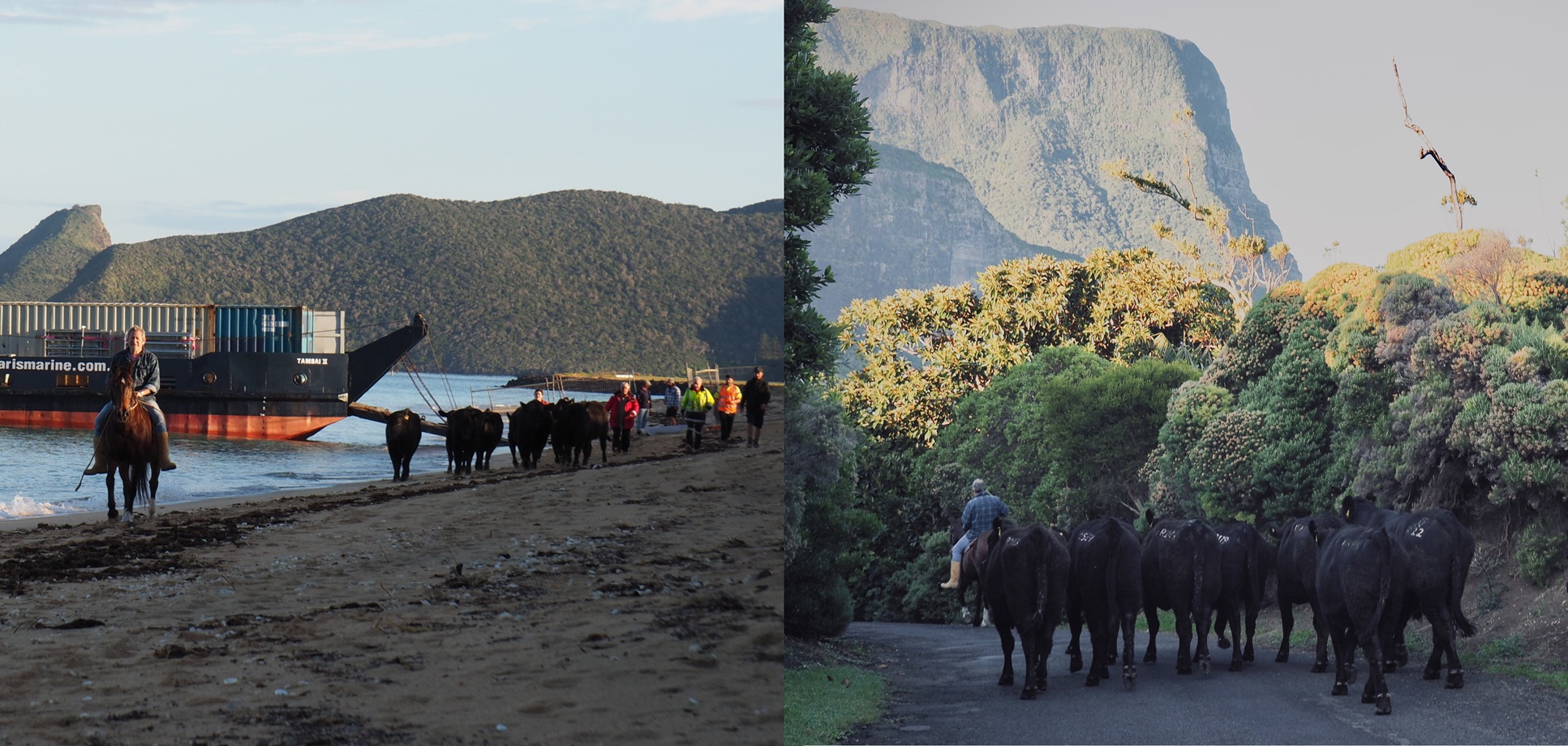
Lord Howe Islanders herd the late Esven Fenton's cattle to their new home after their 60-hour journey by sea from Sydney in 2022. Pictures supplied
CLOSED HERD
The island's remote location, 600km off the NSW coast, makes biosecurity management relatively simple. There is no need for a vaccination program or regular drenching.
The Stewarts' herd is effectively closed, and other cattle on Lord Howe were quarantined and vet-checked throughout the eradication period.
The cattle graze about 12ha of coastal country, watered by Soldiers Creek, which is backed up by a bore that pumps water into an old bathtub when needed.
The Stewarts travel between the island and the mainland for work, business, medical appointments and to visit their adult children, so they time joining to ensure calves are born when they're home.
Working the cattle is straightforward, with a compact set of yards and crush, although Mr Stewart said it could be tricky catching the male calves for ear tagging and castration.
"Because it's a small herd, we can move them about just with the two of us, but everybody lends a hand if you need a hand," Mrs Stewart said.
The only real challenge has been keeping the electric fences standing, with galvanised fittings quickly rusting out in the sea air.
Fortunately, neighbours and friends are quick to let them know if any of the cattle have wandered off.
The Stewarts have continued Mr Fenton's practice of naming the cattle after locals and politicians, including their local member Tanya Plibersek and her three children, Anna, Louis and Joseph. This can make for some dark humour on kill day.
"They've all got personalities," Mr Stewart said.
"We gave the young ones names so we could say, 'Oh yeah, today we shot Lucy'."
For all the appeal of raising Angus under the shadow of Mount Gower, the Stewarts are realistic about what 19 head can do for the island.
Despite a cap limiting tourists to 400 at a time to protect the World Heritage-listed environment, there can be more than 1000 people on the island once residents, staff and visitors are counted.
MEAT ON THE MENU
Mr Fenton and Gower Wilson had set up a basic meatworks, with a cold room for storing and hanging beef until it was ready to be cut up.
The role of butcher is now filled by Mr Wilson's grandson, Deon Nobbs, who also has a small herd of mixed-breed beef cattle.
The Stewarts said the value of having cattle back on Lord Howe was as much about food security as family tradition and preserving a way of life.
"We'll never be self-sufficient in beef," Mr Stewart said.
"But it does help for the island to have some meat and be able to sell local meat.
"You never know when something can go wrong with the ship. We went for six weeks without a ship last year when it broke down ... it's good to have a little bit of self-sufficiency.
"And not only that, by golly, the meat tastes good. It really does."
This article appeared in Spring Angus and here
