

Agritourism's new voice
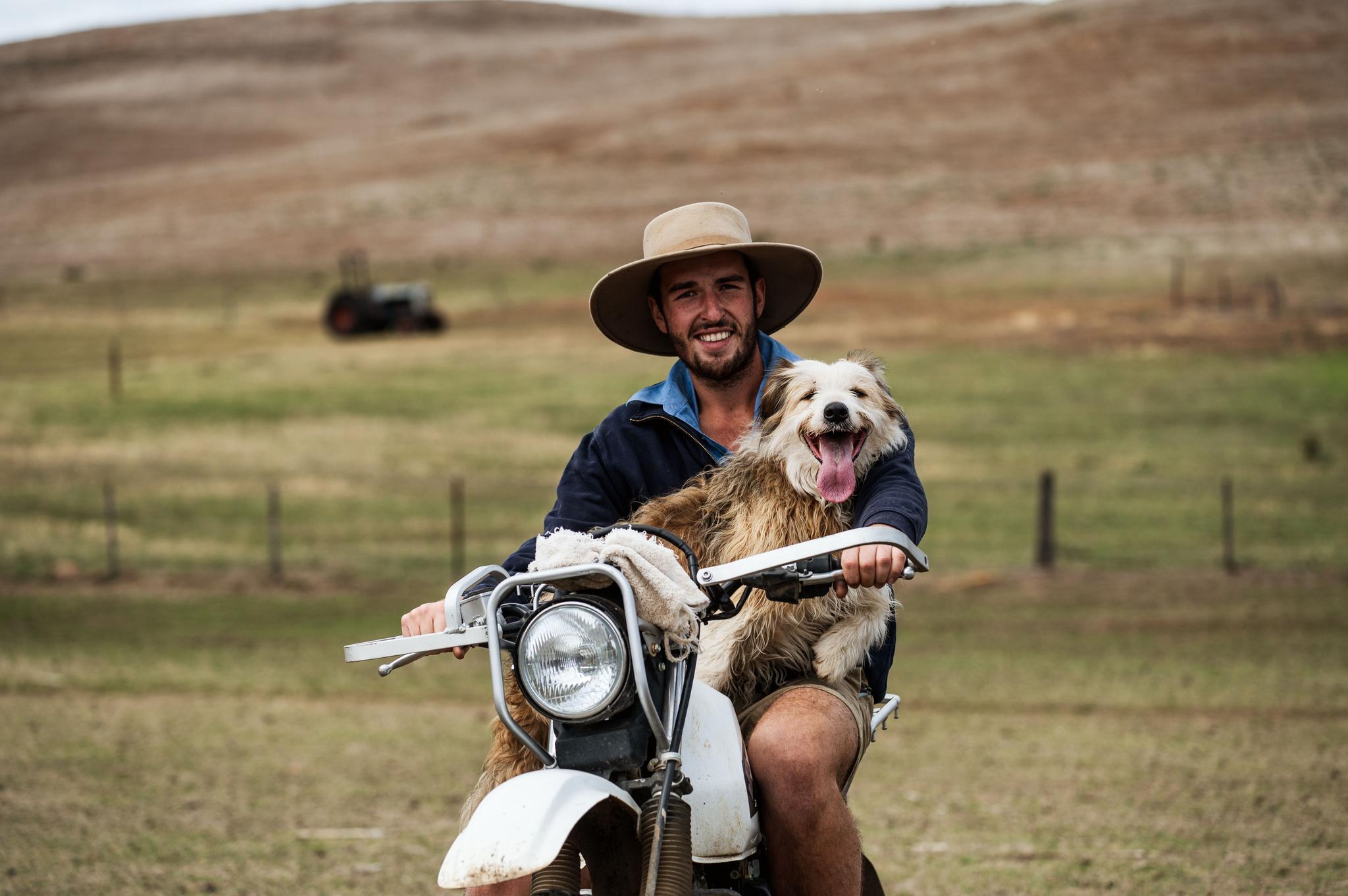
Jock Parsons and Billy the dog are part of the hardworking team at agritourism venture Curringa Farm, Hamilton. Pictures supplied
Farmers running tourism businesses on working properties have a new national voice, with the launch of the Australian Agritourism Network (AAN).
Led by Derwent Valley farmstay operator Tim Parsons of Curringa Farm, Hamilton, it has been formed as a farmer-run peak body.
Mr Parsons said the network aimed to give agritourism operators clearer advocacy, practical support and a stronger profile with governments and tourism agencies, while protecting the primacy of agriculture on farms that open their gates to visitors.
The AAN was launched at the inaugural Global Agritourism Network Conference held in Scotland in June, with Mr Parsons as president and Agritourism Queensland president Kay Tommerup as vice president.
Mr Parsons said Tourism Research Australia had documented demand for agritourism, but there was still little national data on the supply side about who the operators are, where they are and what help they need - leaving many "over-regulated, over-advised and under-represented".
An early priority for the AAN was encouraging operators to take part in a Tourism Research Australia survey designed to identify agritourism products around the country, so the industry could be counted and its needs better understood.
Mr Parsons said the network would sit alongside existing state bodies in Queensland and Western Australia, offering an umbrella for these groups while welcoming individual farmer members from states that do not yet have their own organisation.
Regulation and planning are high on the list of challenges the AAN wants to address.
Mr Parsons said there was "a whole heap of chicken and egg stuff" in the approvals process when farmers try to run tourism businesses on agricultural land.
This included cases where it was legal for farmers to sell food at a local market but illegal to serve it on-farm because the business did not fit into boxes that could be ticked like a conventional licensed restaurant.
"We can't fix all the problems, but we would like to have discussions with the authorities to understand these problems and look for ways to work around them," he said.
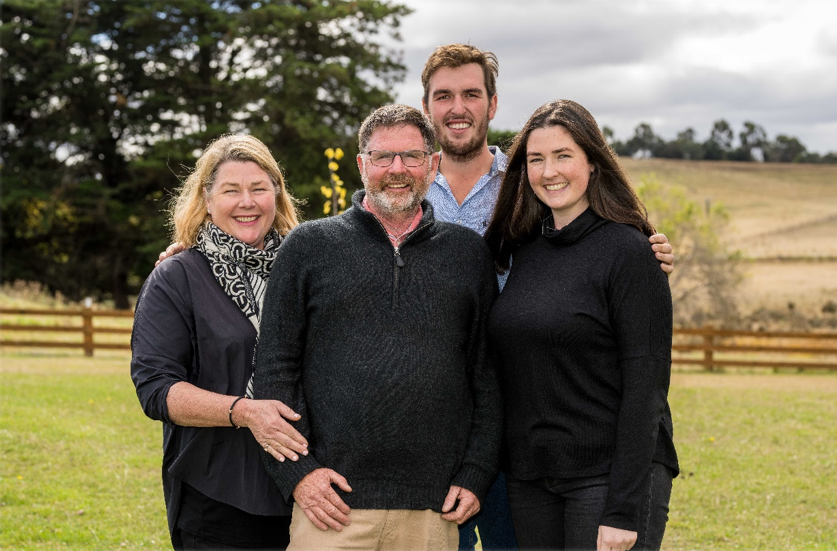
Inaugural Australian Agritourism Network president Tim Parsons, with wife Jane and children Jock and Sarah.
Agritourism is not new - especially in Tasmania - and Mr Parsons brings more than 40 years' experience to his role as AAN president.
Curringa Farm began welcoming guests in 1984, when his mother Sue and some other farmers' wives in the Midlands "decided to do something extremely bold by opening up some farm stay accommodation for visitors".
"It started up as a cottage industry, literally," he said.
"And as a child, we watched our parents have visitors come to the farm, and over that time through the end of our schooling, the business got more and more involved and engaged."
Mr Parsons and his wife Jane bought the 300ha mixed sheep and cropping farm from Sue and John in 2002.
They have since expanded the farmstay business and brought son Jock on board.
Running up to 1500 Suffolk ewes producing prime lambs which graze on pasture and lucerne, they also have Highland cattle, alpacas and grow wheat, vegetable seed crops and poppies.
"Whilst they're productive in their own right, these make some amazing agritourism stories for our visitors who come to look and learn about farming and where their food comes from," he said.
"Diversifying into agritourism has resulted in us having a very productive farm that's enabled us to do things that we wouldn't on this scale of farm if it was traditional commodity-based."
Mr Parsons said agritourism had environmental and animal welfare benefits as well as economic rewards.
"When we have visitors come to the farm, it enables us to run less sheep," he said.
"So those sheep are more happy. Their fertility is better. Their lamb growth is better ... our reliance on chemicals and fertilisers is less because we're not pressuring that soil resource."
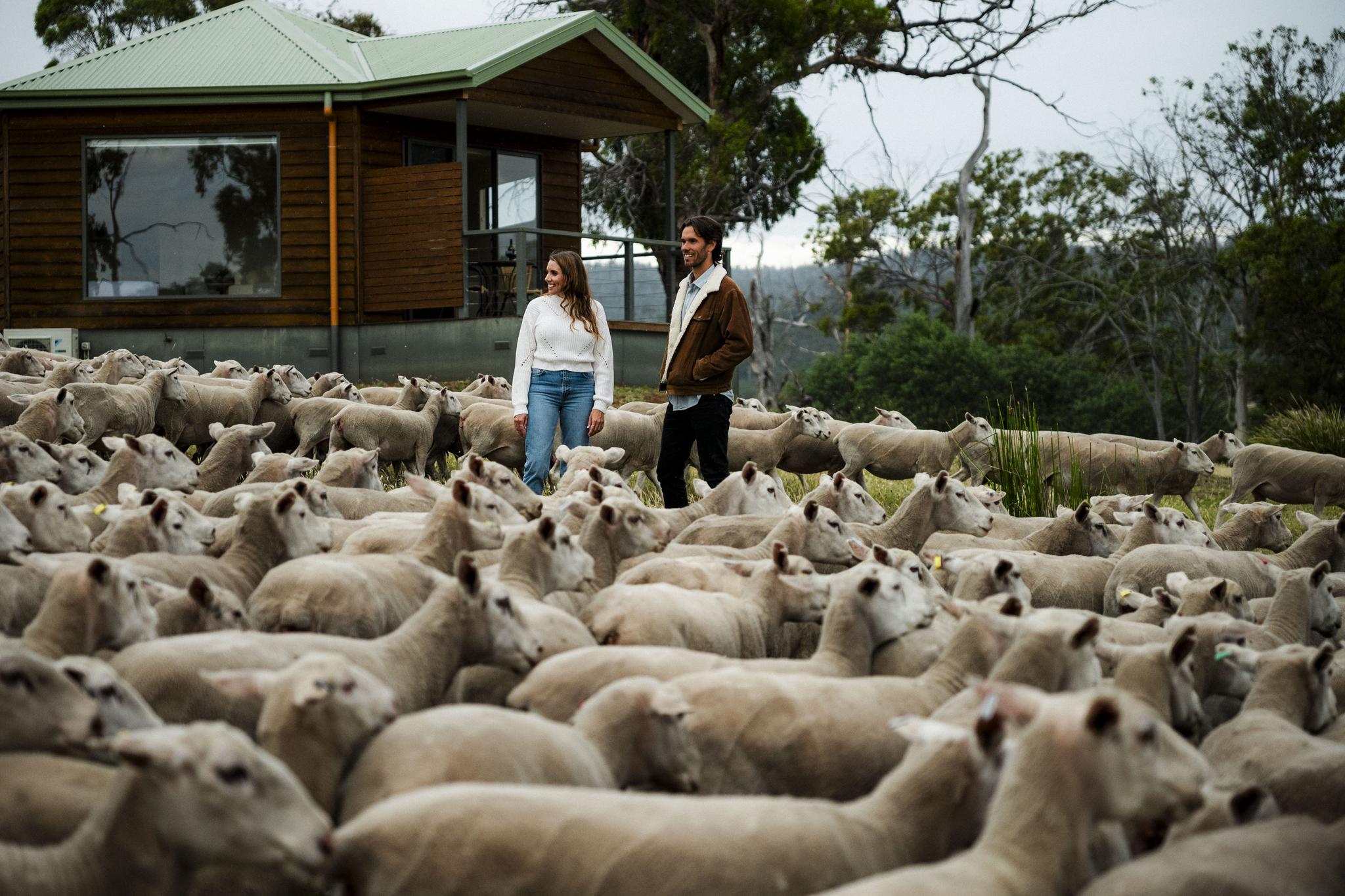
Curringa Farm offers nine self-contained cottages and experiential tours featuring sheep shearing, dog demonstrations, barbecue lunches and conservation stories.
It backs onto Lake Meadowbank for water skiing and fishing, and is in close proximity to Mount Field National Park which three-quarters of guests visit.
Just before the pandemic, Mr Parsons said the farm hosted around 13,500 visitors a year, most from Hong Kong, with a quarter staying overnight.
They expect to welcome between about 8500 and 9000 visitors this year from a range of markets, including Hong Kong, Singapore and mainland China.
"The long haul North America, Europe and UK has bounced back really quickly as a new market for us," he said.
"Our traditional south east Asia/greater China is a pretty good mainstay, and about 15 per cent of our business is shore expeditions for cruise passengers to spend a day in the Derwent Valley."
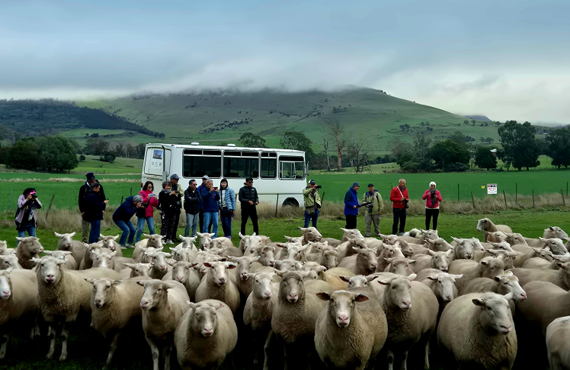
While the numbers might have fallen because of a decline in group coach tours, Mr Parsons said luxury travellers were making up the shortfall.
"Our niche touring market of high value spenders are coming and staying overnight and staying for multiple nights and having a bespoke farm experience," he said.
"International tourism is really exciting, and the luxury traveller is no longer measuring against how much they spend, but they're measuring against what they can do that is different from the traditional tourism pathways.
"To get out into the regions and meet the maker and get onto a farm is becoming a really valuable experience for the consumer.
"We want to ensure that the consumers can find us, not only the luxury ones, but all consumers. And by having a strong voice and a consistent national voice through the AAN, we can go a long way towards achieving that."
This article appeared in Tasmanian Farmer.
