

Bright start in the valley
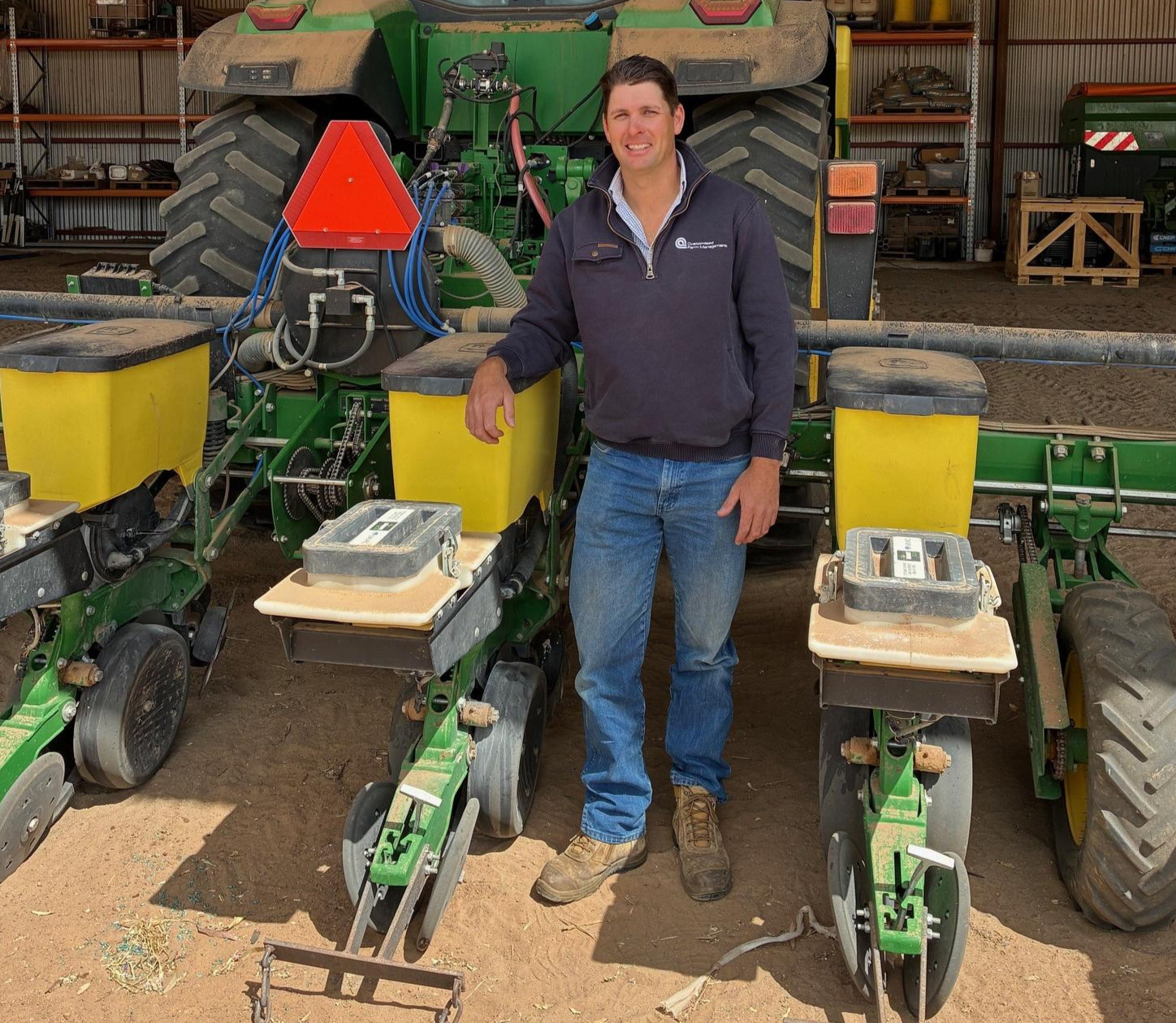
Customised Farm Management (CFM) regional manager Richard Malone. Pictures supplied
After one of the best starts in years, Customised Farm Management (CFM) regional manager Richard Malone is hoping for another rewarding season in the Murrumbidgee valley, despite the looming spectre of a super El Nino.
“With the couple of weeks we've just had – I don't want to jinx this – but it’s been one of our warmest starts we've seen in the last 10 years,” he said.
“So we should see ourselves through a good establishment period. Hopefully, we don't get too much wind and cold weather through November, and the valley will be on target for another successful year.”
Mr Malone, who manages CFM’s properties in southern NSW, said they had initially thought the worst when the Bureau of Meteorology warned in April of a potential strong El Nino.
“When we set our crop plans back in May-June, with the outlook going forward, we were thinking that river water was going to be unobtainable for broadacre crops,” he said.
But rain in the catchments had increased water availability and softened the temporary water price, allowing them to secure enough water to irrigate a bigger area across the Murrumbidgee even if the season turned out to be hotter and drier than average.
“That's not necessarily a negative for cotton growers in the Murrumbidgee,” he said.
“A warmer than average season is actually going to lend its hand to a better start, better establishment and perhaps better overall yield from a long term perspective.
“We've got our water secured for the season now, at what we consider would be our higher end of water usage per hectare, because we expect conditions to perhaps stay warm and dry.
“That way, we're not having to enter the market late in the season to try and pick up additional water when the price might be almost double what it currently trades.”
CFM produces cotton on five farms in the Murrumbidgee. Two of them – Tiralee at Whitton and Uri Park at Darlington Point – are both irrigated from the Murrumbidgee Irrigation Area (MIA) via channel or the river and with access to water from the Lower Murrumbidgee groundwater system when needed.
Last season, 350 hectares of Sicot 606B3F, Sicot 714B3F and Sicot 619B3XF were grown at Uri Park which is irrigated with a combination of bankless and siphon systems. The Sicot 606B3F delivered the best yields, averaging 13.3 bales a hectare.
Mr Malone said the 545ha of Sicot 619B3XF at Tiralee, which is set up for bankless irrigation, performed well, despite pressure from black root rot, yielding an average of 12.4 bales a hectare.
Pest pressure was very low at both farms, requiring only one insecticide spray for sucking pests, while weed pressure was average and addressed with variety choice and three or four herbicide applications.
After a reasonable establishment period in early October, spring turned windier than average, followed by a November cold snap that stalled growth, but crops caught up in December.
“We were pretty much on track with an average season up until New Year's,” Mr Malone said.
“We had a particularly hot period that week of Australia Day ... our peak boll fill period, and that coincided with almost six consecutive days of 45 degrees, so that was a challenge for the crop to be able to cool itself.”
Surprisingly, canopy sensors on moisture probes showed some crops were almost 10 degrees below ambient air temperature.
“We do know, however, that for every hour of leaf canopy temperature over 34 degrees, we lose 0.1 of a bale per hectare per hour so some yield loss through these conditions is unavoidable,” he said.
“The crops probably did lose a little bit of potential … but extended heat into March helped continue to develop fibre length and micronaire.
“(They), which ended up giving us pretty good quality, and also can contribute anywhere from five to 10 per cent additional yield to the crop.”
Water consumption totalled 10.1 megalitres a hectare at Uri Park and 10.3ML/ha at Tiralee, which Mr Malone said was “pretty good in a year where we had a quite a hot, dry summer with very little rainfall”.
Now the canopy sensors have proven their worth, they will be installed in every field and CFM is working with Goanna Ag on a trial of automated irrigation scheduling.
The cotton was harvested at Darlington Point from April 23 to May 4, and from May 2 to 13 at Whitton, with no weather interruptions.
Mr Malone said quality was exceptional, with higher than base grade colour, although some high micronaire resulted from heat in January and March.
Modules were sent for processing to the Southern Cotton gin at Whitton.
Preparation for the 2026-27 crop included application of chicken litter at an average of 13 cubic metres a hectare.
After using it for nine years at Darlington Point and two years at Whitton, along with incorporating winter crop stubbles, Mr Malone said they had seen improvements in soil structure which had boosted germination, establishment and moisture infiltration.
“With MAP at around $1650 a tonne delivered, the phosphorus is much cheaper from the chicken litter,” he said.
“But we also get the added benefits of zinc, potassium, calcium, and some nitrogen ... which we don't get with the MAP that are also helping benefit the system.”
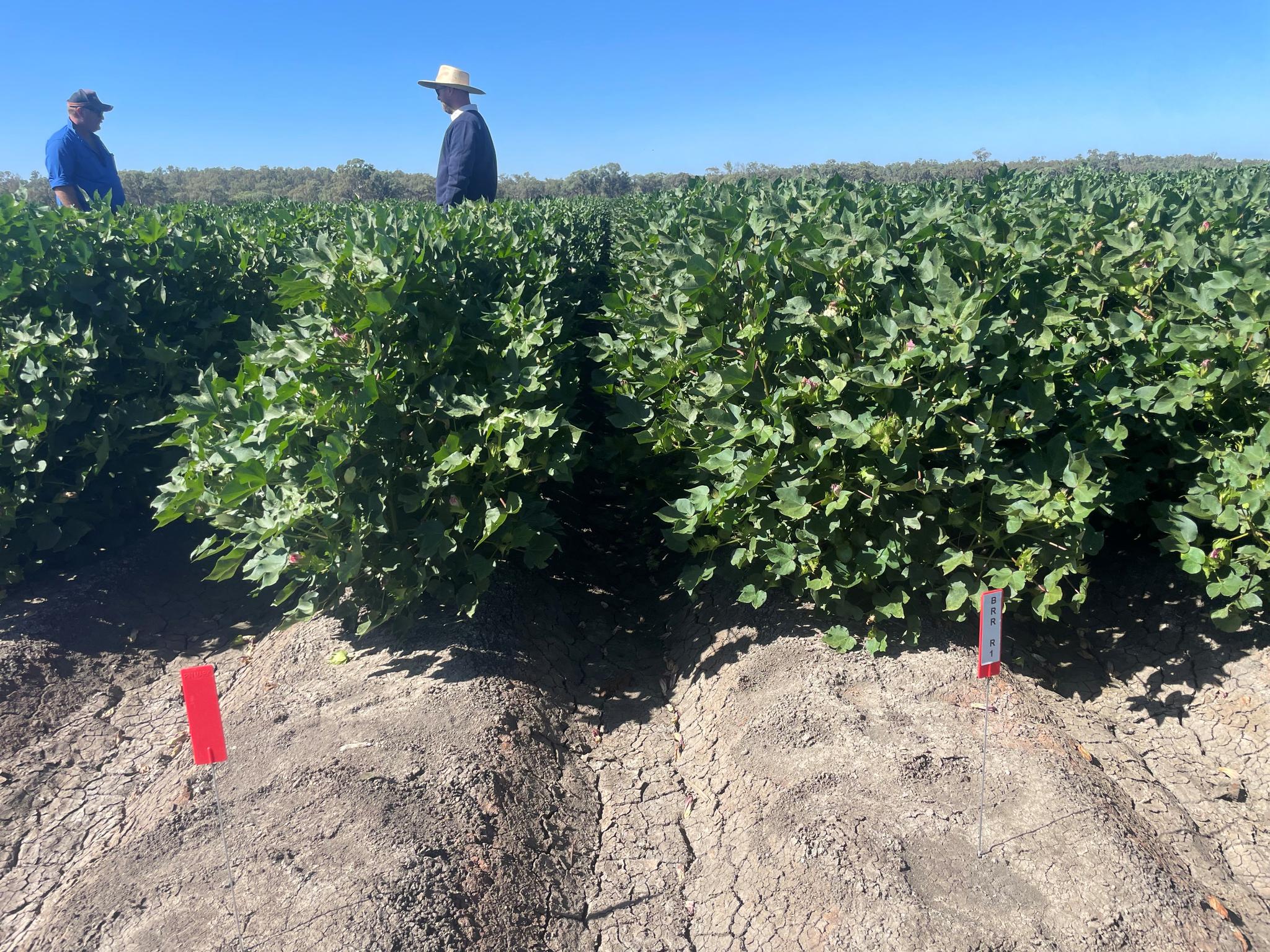
CFM has been working with CSIRO researchers on trials at Tiralee, Whitton, to develop new cotton varieties with increased resistance to diseases such as black root rot.
Planting of 405ha of Sicot 606B3F and Sicot 619B3XF at Darlington Point began on September 26 and on October 7 at Whitton, where the entire 568ha will be devoted to Sicot 619B3XF.
Mr Malone said they preferred to stick to “proven performers” although there had been promising results from a decade of work with CSIRO on increased resistance to diseases such as black root rot, which particularly affects southern region growers because of the shorter season.
“The two trial lines that we had out of the CSIRO breeding program look like they outperformed the 619 in terms of disease resistance, and that was by almost two bales to the hectare,” he said.
“We are very excited about the advancement in that technology, particularly for this valley and also the Murray and Lachlan valleys. It's just not commercialised yet.”
CFM is a rural asset management company, managing more than $700 million of irrigated and rain-fed broadacre, grazing and horticultural properties throughout Queensland, NSW, Victoria and the Northern Territory.
This article appeared in Australian Cotton & Grains Outlook.
