

Bringing automation online
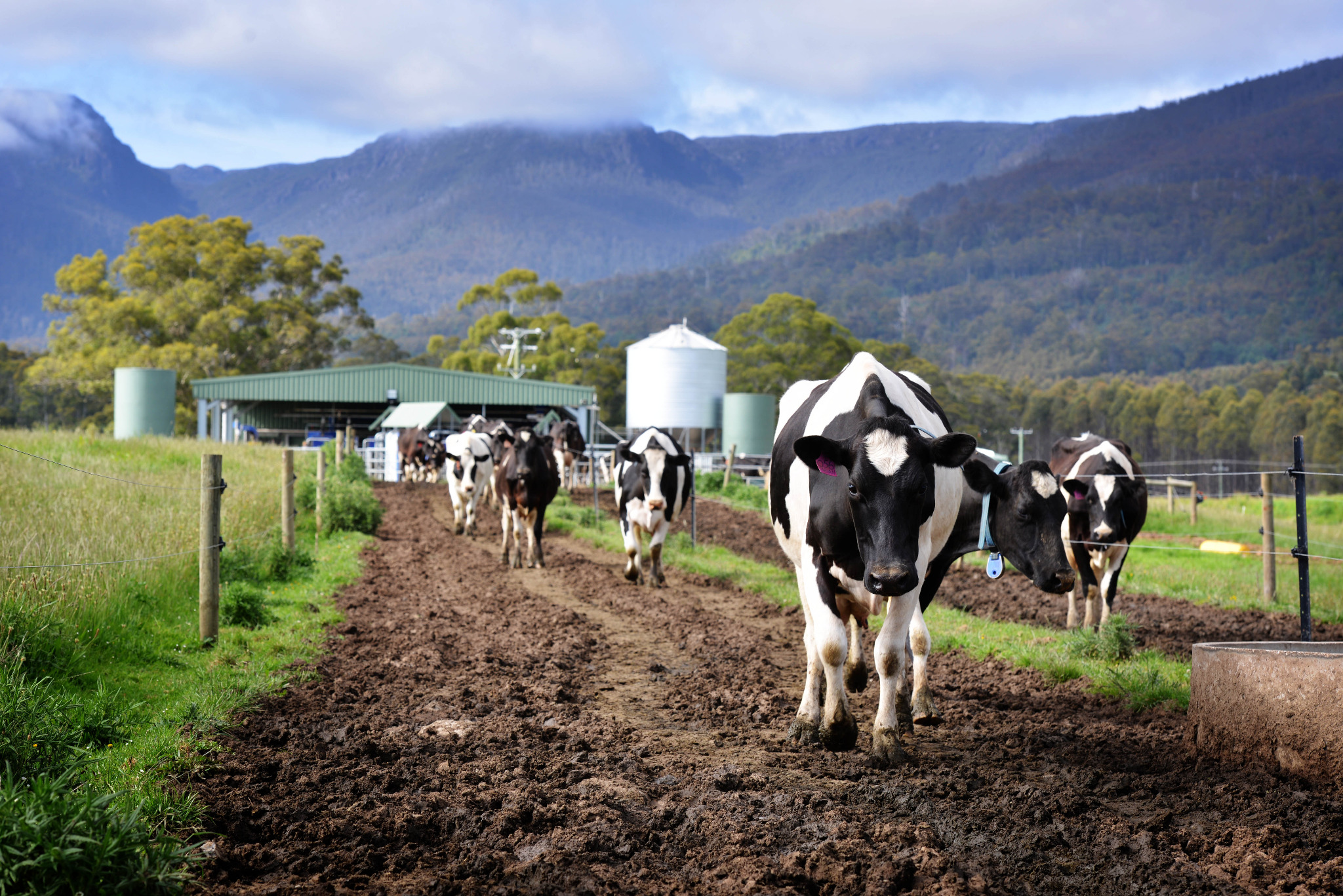
Robotic milking has been used in Australian dairies since 2001, with adoption increasing as herd sizes grow, labour becomes scarcer, and production costs rise.
With fewer people willing to work long hours, the traditional twice-daily milking model is becoming less sustainable. But research shows there are several barriers to widespread adoption.
Kempsey dairy farmer Kate Hand would love to build a new shed and let robotic units do the milking.
After taking over the family farm, Yarravell, a decade ago, they upgraded everything they could, adding a self-washing vat and feeder system to take care of jobs that were still being done manually, along with automatic cup removers, an irrigation system and another silo for on-farm feed storage.
Even so, the 40-year-old herringbone swingover dairy with nine sets of cups and its outdated yards were inefficient – taking up to three hours to milk 160 cows – and needed to be replaced for them to stay in business. They began researching replacements more than five years ago and an automatic milking system (AMS) was one of the options they considered.
The advantages of AMS were numerous: Cows could milk themselves more than twice a day, potentially increasing production, hygiene was consistently high, and analysis of milk quality in real time could identify cows at risk of health issues, such as mastitis.
“There’s so many pros,” Ms Hand said.
“I think it’s amazing technology. They’re great for the cows and they’re great for humans, and it’d be great if we could all adopt it, but it’s not going to work for everybody. Being a farmer and working seven days a week, milking cows twice a day, really is exhausting. Even as a small farm it would be nice if we could just take that out of the equation so we could spend time on other things.”
The high upfront cost – each unit costs hundreds of thousands of dollars – the expense of ongoing maintenance, and being able to access technical support at all hours of the day or night were among the barriers to adoption, even for those farmers who offset higher energy consumption with solar power.
“If you’ve got a functioning conventional dairy and it’s working well for you, you wouldn’t go out and drop several million dollars to change that,” she said.
However, Ms Hand said it was definitely an option for farmers with a greenfield site where they could plan laneways and the paddock grazing system to suit a centrally-located robotic dairy.
HOW IT WORKS
The first commercial automatic milking system (AMS) was installed in the Netherlands in 1992, and more than 50,000 units were now used worldwide.
The majority of cows in northern hemisphere AMS’s were in smaller herds – housed and fed indoors for part or all of the year – while Australian dairy cows mostly grazed in paddocks, requiring them to walk longer distances to and from milking.
Victorian farmers Max and Evelyn Warren became the first in the country to adopt robotic milking – and the first in the world to use it in a pasture-based system – when they installed four Lely units to milk up to 300 cows at their Gippsland dairy in 2001.
A dearth of research into the use of AMS in commercial pasture-based systems prompted the Milking Edge Project, an investigation by NSW Department of Primary Industries and Regional Development (DPIRD), Dairy Australia and Swedish dairy equipment manufacturer, DeLaval.

NSW Department of Primary Industries and Regional Development (DPIRD) development officer Dr Juan Gargiulo. Photos supplied
A recent report found AMS-equipped farms in Australia on average achieved comparable economic and physical results to conventional milking systems.
And while AMS and other technologies offered significant potential, the report concluded their success depended on careful planning, ongoing management and a willingness to adapt.
It also found Australian AMS farms typically milked 150 to 240 cows, using three to four robotic units. Average daily milk production was 19.3-26.3kg and cows were milked on average 2.17 times a day, with each robot harvesting about 1200kg of milk each day.
Lead author, NSW DPIRD development officer Juan Gargiulo, said farmers had shown increasing interest in AMS in recent years, but many had been deterred from adopting it by fears the tech would be too costly and less profitable than traditional systems.
About 1.5 per cent of farms had implemented AMS and monitoring showed significant variability between individual farms, which extended to farmer attitudes towards efficiency and sustainability.
“Not everyone is looking for reducing labour,” Mr Gargiulo said.
“They look for other things, for more flexibility. We also found there was a lot of room for improving the efficiency of the robot and those achieving higher profitability were milking more cows per robot and harvesting more milk per robot."
Mr Gargiulo said one of the prime reasons farmers were not considering AMS was farm layout and distances between paddocks and the feed pad. Another hurdle was convincing risk-averse banks that AMS was worth them underwriting loans of six or more figures.
“Sometimes banks see this as a riskier investment, so the terms or the interest rates are not favourable for the farmer, and that also affects adoption,” he said.
RISE OF THE ROBOTS
The number of dairies equipped with AMS is thought to have doubled since the 38 operating when the Milking Edge Project started in 2018, and more were on the way.
Dairy Australia principal scientist John Penry didn’t expect robotic milking to replace all conventionally milked herds. And while AMS might not necessarily transform the profitability of dairy farming, he said it would give farmers greater freedom and flexibility in how they managed their farms.
Mr Gargiulo expected adoption of both AMS and more intensive dairying to continue as a new generation of tech savvy farmers and workers entered the industry.
“I would say less than 5 per cent of the data it collects is utilised to make decisions ... I see a great potential with this technology, and also the integration with other sensors and other technologies,” he said.
This included wearables and smart sensors that allowed for early detection of health issues and improved fertility management, as well as precision feeding systems which reduced waste and improved milk yield.
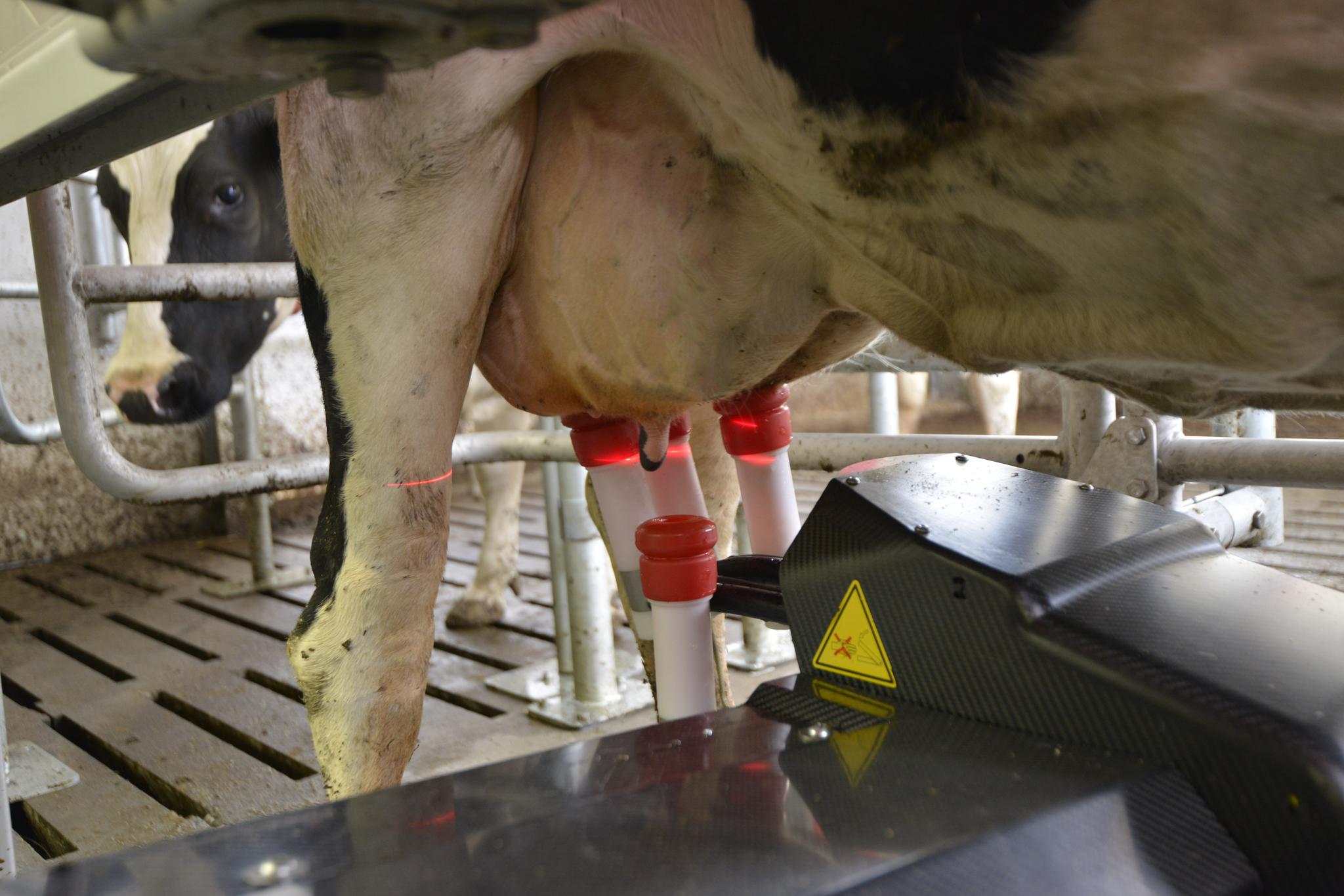
Automatic milking systems use a robotic arm to wash each teat before lasers guide the attachment of milking cups.
HOW DOES AMS WORK?
The units operate on the principle of cows choosing when to be milked across a 24 hour period. Usually motivated by hunger and the pressure in their udder, the cows voluntarily return to the AMS which scans their electronic ID tag or collar and decides whether they’re ready based on computer records for the individual animal.
The unit uses a robotic arm to wash each teat before lasers guide the attachment of milking cups. As cows are milked, they are fed a specific ration based on their milk production records. Sensors collect information about weight, quarter yield, quarter conductivity, colour, fat, protein and somatic cell count, which is a key indicator of udder health and milk quality.
Once milking has finished, the cups are automatically removed, the udder sterilised and the cow is released.
This article appeared in The Farmer magazine
