

Citrus industry invests in trade data to drive export growth
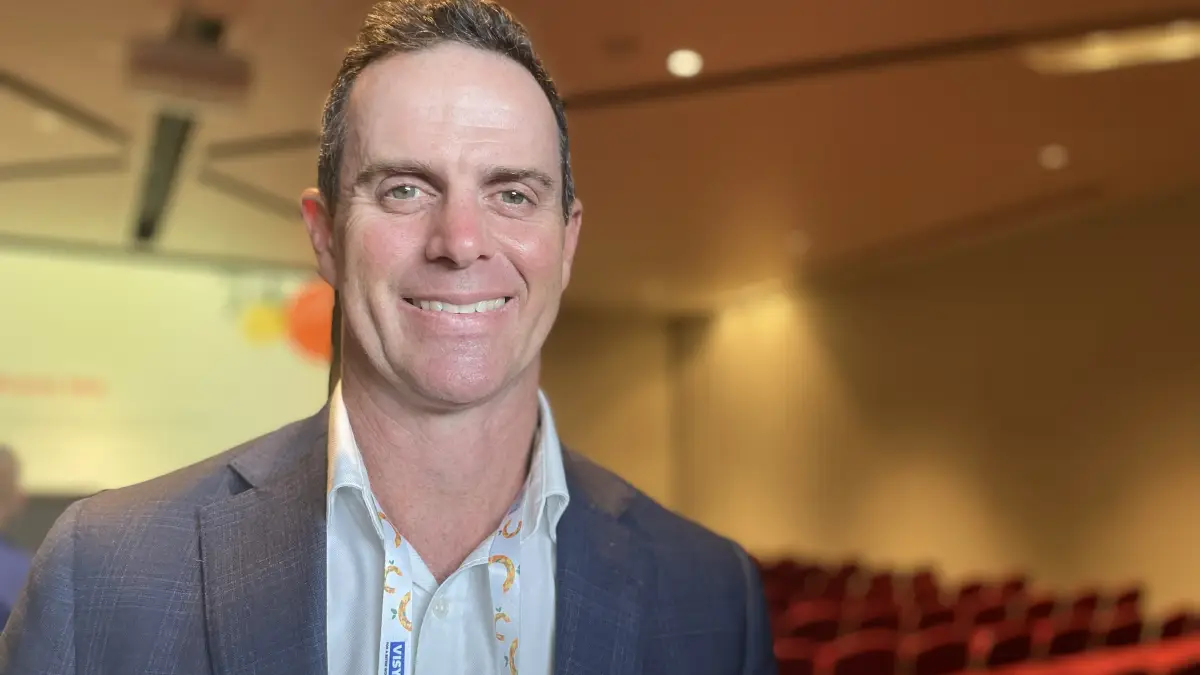
Hort Innovation general manager of industry service delivery Andrew Francey. Photos by Sandra Godwin
Citrus reached its highest farmgate value of $1.2 billion in 2024-25, and achieved its highest combined export value on record at $570m, making a significant contribution to the Australian horticulture sector's total production value of $18.4 billion.
Speaking at the Australian Citrus Congress in Adelaide, Hort Innovation general manager of industry service delivery Andrew Francey announced the development of a new trade data portal that would provide monthly global import and export information - across 144 countries and by product type.
The three-year project, to be delivered by S&P Global Market Intelligence, would allow monitoring of performance, comparison of markets and allow emerging trends to be spotted sooner.
"We will be providing free access to all levy payers through a new trade data dashboard in the coming months, so you can understand key country opportunities, gaps, pricing and competitors for your products," he said.
Mr Francey said citrus export volumes reached a record level last year, with growth of almost 70 per cent in the past decade.
"It's one thing to have growth; it's another thing to have profitable growth," he said.
Mr Francey said Hort Innovation planned to invest $21 million in citrus R&D over the next four years, half from grower levies and half from matching government funds.
About 450 growers, packers, exporters, juice processors, researchers and agribusiness representatives from across Australia and overseas gathered at the Adelaide Convention Centre to hear from more than 60 speakers about the latest in crop protection, food security, trade dynamics, biosecurity, the changing consumer landscape and R&D.

Citrus Australia chief executive officer Nathan Hancock.
Citrus Australia chief executive officer Nathan Hancock said the 2025 tree census showed plantings had increased 3 per cent from 2024, and a mapping project identified 45,000 hectares of citrus in the ground.
Forecasts showed citrus production was on target to reach 1.2 million tonnes by 2030, an increase of 41pc on current levels.
"Recently, we put together an export strategy, and our projected export target is 445,000 tonnes in the next five years," Mr Hancock said.
"So another increase of 21pc in exports. We have access to 54 countries for most of our citrus products and are working on market access improvements, including to the US."
Mr Hancock said Citrus Australia also was working with industry to educate consumers in export markets on the benefits of consuming Australian citrus.
"We are an industry - I don't need to tell you, but I'm going to anyway - that relies on our premium markets to make our financials work," he said.
"We can't rely just on growing high quality fruit. We also have to have high quality post-harvest practices."
Keynote speaker Agsecure principal Andrew Henderson spoke about food security in a global context and highlighted Australia's vulnerability.
Despite exporting enough food to feed 70 million people around the world, Mr Henderson said 7.6 million tonnes of food was wasted, and one in three Australian households last year experienced moderate to severe food insecurity.
"Food waste represents a material and largely invisible economic risk that is gutting our productivity," he said.
"That is a fundamental threat to our social cohesion. If people lose faith in a supply chain's ability to feed them, political and social instability (will) follow."

Freshcare chief executive officer Jane Siebum.
Delegates also heard from Freshcare chief executive officer Jane Siebum, who spoke about a review of Freshcare's five standards, which affect 4600 businesses in Australia, and have 191 elements for growers, plus another 254 for the supply chain.
Ms Siebum said language had been simplified, duplication reduced, and training and accessibility improved. A smart list prototype was being developed to streamline the process for growers.

Approved Employers of Australia executive officer Steve Burdette.
Approved Employers of Australia executive officer Steve Burdette said labour continued to be a significant challenge, accounting for more than 60pc of citrus production costs.
AEA represents employers taking part in the Pacific Australia Labour Mobility (PALM) scheme, which Mr Burdette said had been "a resounding success", with 28,000 workers on its books.
He highlighted the need for innovation, risk management, advanced recruitment planning and training "in language" to ensure expectations were met.
This article appeared in Good Fruit & Vegetables
