

Data exposes cotton margin squeeze
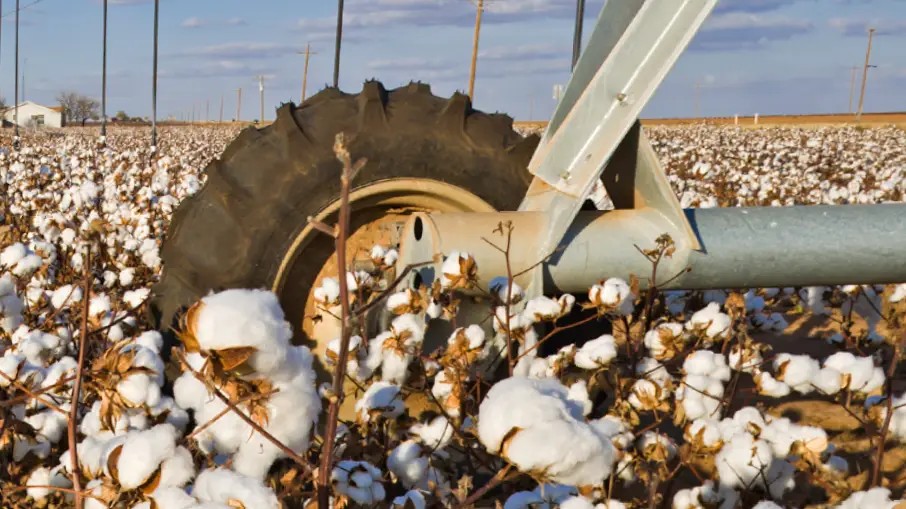
The 2025 Australian Cotton Comparative Analysis found average irrigated growers achieved yields of 12.42 bales a hectare, up from 11.96 bales/ha in 2024. Picture supplied
Australian cotton growers have lifted yield and maintained strong profits, but a new report confirms what they already know - margins are becoming tighter as production costs continue to rise.
The 2025 Australian Cotton Comparative Analysis found average irrigated growers achieved yields of 12.42 bales a hectare, up from 11.96 bales/ha in 2024.
"In contrast to some earlier drought-affected seasons, 2025 was a solid, profitable year, with a farm net profit of $1780 per hectare," the report said.
"This compares with $1227 profit per hectare in 2024 and the five-year average of $2417 profit per hectare."
Produced by accounting and advisory firm Boyce since 1986, the latest report was accompanied by interim results for 2026, which point to another potential lift in productivity.
That sample averaged yields of 13.27 bales/ha, but showed operating costs have risen to $5323/ha, which was $467/ha above the 2025 result and $436/ha above the five-year average.
Cotton Australia general manager Adam Kay said growers were familiar with the direction of the figures.
"You can see the increasing cost of production that everyone's feeling," he said.
"That's why our growers concentrate so hard on increasing their yields because the only way you can make up for the increasing cost is just to produce more.
"Average yields last season were really good and that's kept growers profitable."
The substantial lift in plantings during 2025 - when the average participating grower planted 1011ha, compared with 775ha in 2024 - was attributed to improved water availability across most cotton valleys.
According to the report, that larger area helped dilute fixed and semi-fixed costs, with average operating costs falling from $5794/ha in 2024 to $4856/ha in 2025, even as fertiliser costs increased to $912/ha.
Softer prices affected total average income, which fell by $652/ha to $7292/ha, as the average net bale value eased from $664 to $587.
The top 20 per cent averaged 13.75 bales/ha in 2025, 1.33 bales/ha more than the average group, and contained operating costs to $4111/ha.
Their cost of production was $299/bale, compared with $391/bale for all farms, and farm net profit reached $3480/ha.
In the five years to 2025, the top 20pc achieved average net profit of $3834/ha, which was 59pc, or $1416/ha, above the all-farms average of $2417/ha.
Boyce head of agribusiness Angas Swann said the report contained practical insights growers could use to understand performance and make more informed business decisions.
"It helps growers see where their business sits against the broader industry and what top-performing businesses do differently," he said.
Mr Kay said growers should use the analysis to interrogate differences in their own businesses, rather than treating the average as a target that applied equally to every valley or farming system.
"It's an average from a lot of farms, and if you've got a massive variation, you might be asking why," he said.
"In most cases where there's a variation, a farmer will understand why in his situation it is, but you just never know.
"You might pick up something that other people are doing, and that might help you."
Mr Kay said prices looked like improving for the coming season thanks to heat and drought in Texas and other global factors.
"You can sell cotton for this coming season at around $660 a bale at the moment, which is a reasonable level," he said.
"Cotton is still the world's number one natural fibre, and it's in demand. In Australia we sell every bale we produce each year. People want to be clothed in natural fibre.
"Man-made fibres that are made from oil, such as polyesters and nylons are going to become more expensive, so that's making cotton more competitive."
Mr Kay said benchmarking would become increasingly relevant in the industry's sustainability framework as myBMP undergoes a major restructure.
The redesign is aimed at bringing it into line with international standards such as the Better Cotton Initiative and the Textile Exchange Materials Matter Standard by the end of next year.
"It's hard for people to carry out sustainable practices and do the right thing if they're not making a dollar," Mr Kay said.
This article appeared in Queensland Country Life
