

Immunity from within
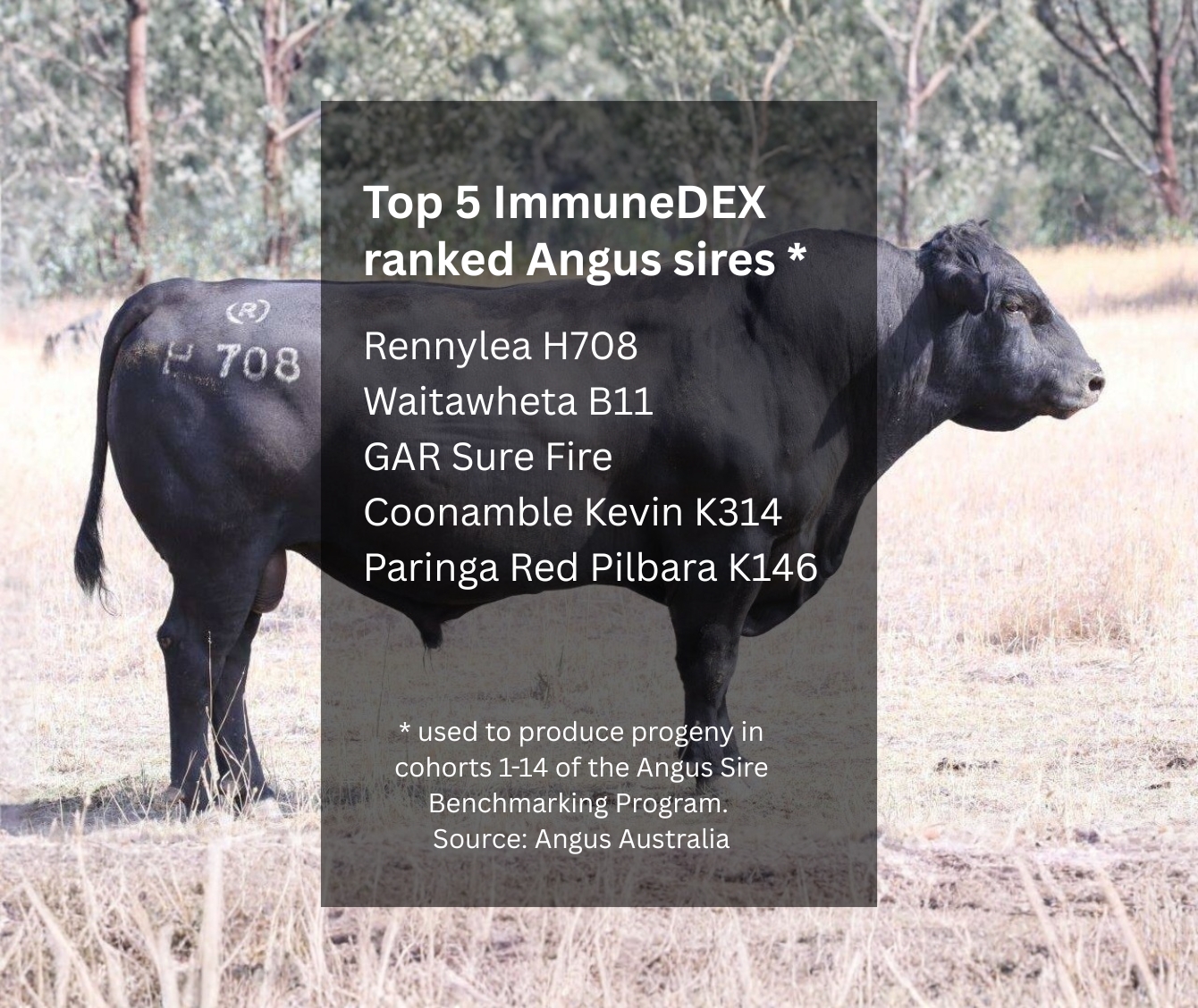
A new research breeding value is poised to help Angus producers strengthen herd health from the inside out.
Known as ImmuneDEX, this breakthrough EBV (Estimated Breeding Value) measures immune competence - the inherited ability of an animal to mount a robust immune response when exposed to a disease threat.
Developed by CSIRO scientists in partnership with Meat & Livestock Australia and Angus Australia, it represents a world-first genetic tool for breeding beef cattle that are not only productive but also naturally healthier and more resilient.
Breeding for resilience
Former CSIRO scientist Dr Brad Hine, who is now an extension officer with Angus Australia, said immune competence described how well an animal's immune system could respond when it identified a threat.
"We see spikes in disease incidence when animals are under stress," he said.
"Therefore, immune competence is assessed when the animals are under the stress of weaning, with the aim of identifying animals that can better cope with disease challenges when exposed to stressors."
This ability is partly affected by management conditions, but crucially, research shows immune competence is moderately heritable - meaning it can be selected for alongside traits such as growth rates or fertility.
The ImmuneDEX value combines two key measures: antibody-mediated immune responses, which are most effective against pathogens that live outside cells, and cell-mediated immune reponses, which are most effective against intra-cellular pathogens that live inside cells, such as viruses.
Cattle that are good at mounting both types of responses are rated as highly immune competent and expected to be resistant to a broad range of diseases.
From lab to paddock
The ImmuneDEX EBV grew out of a decade of CSIRO-led research, much of it anchored in the Angus Sire Benchmarking Project (ASBP).
Early studies involved immune competence testing (IC) calves at weaning, ranking them for IC and then following them through feedlot finishing.
This work, funded by the Australian Lot Feeders Association through Meat & Livestock Australia (MLA) revealed a strong link between immune competence and real-world health outcomes at the feedlot.
In an initial MLA project, only 12 per cent of steers entering the feedlot were classified as low IC animals, but they accounted for 35pc of all health-associated costs, which averaged $103 per head.
By contrast health-related mortalities in steers classified as high IC animals were significantly lower and they incurred average health costs of about $5 per head.
Those results triggered other research including an MLA project to further quantify the benefits of breeding for IC in feedlots. It found steers that were below average for IC were three times more likely to die during feedlot finishing than steers rated above average for IC.
MLA also funded a project to IC test progeny from the Southern Multibreed Project - involving 3183 cattle from seven breeds.
Dr Hine said the two-year study led by Dr Aaron Ingham assessed immune competence across breeds and confirmed each breed had low and high IC animals.
"There's way more variation within a breed than there is between breeds, and that's what we see for many traits," he said.
Angus Australia also has independently funded the IC testing of several cohorts of progeny from the ASBP. This work has importantly shown only a weak negative correlation between IC and growth traits, meaning it is possible to breed cattle that are both productive and resistant to disease.
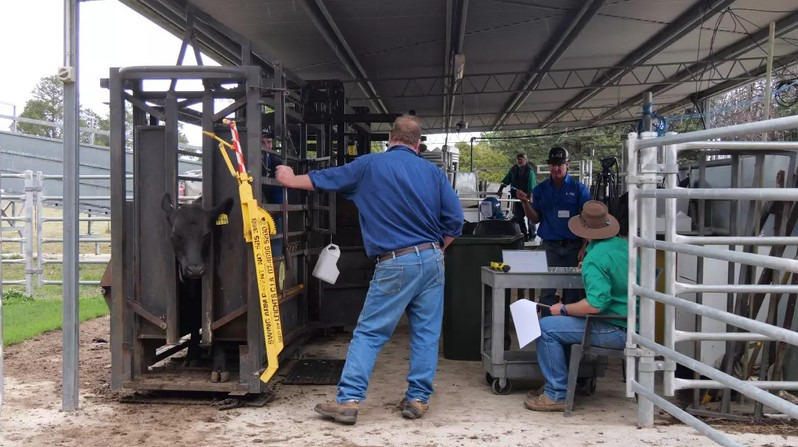
Then-CSIRO researcher Dr Brad Hine operates the crush as Angus steers are weighed and measured, and samples taken in 2024. Picture supplied
Why it matters to producers
For beef producers, the payoff is in healthier, more resilient herds that incur fewer health-related costs. Healthier stock also require fewer antibiotic treatments - a growing priority for welfare and market assurance reasons.
Dr Hine said selecting for immune competence aimed to address consumer expectations around antimicrobial use while simultaneously ensuring optimal animal welfare outcomes.
Commercial feedlot trials have backed the economics. When researchers ranked animals by immune competence, the "high responders" outperformed "low responders" once losses from sickness and death were factored in.
"When you put a lot of pressure on animals to be really productive, that's when it starts to impact on them," Dr Hine said.
"We're trying to advocate for producers to keep putting selection pressure on production traits - that will always be important - but let's also put some emphasis on health and fitness traits so we can drag them both along together."
Building the EBV
To turn these insights into a usable selection tool, researchers developed a genomic prediction equation for immune competence based on thousands of phenotyped and genotyped animals.
This genomic EBV, known as ImmuneDEX, lets breeders compare animals on a scale similar to other EBVs. A higher ImmuneDEX indicates genes linked to stronger and more balanced immune responses.
ImmuneDEX appears as a research breeding value within Angus Australia's database.
Breeders can request it for any genotyped animal, allowing early adopters to identify sires and dams that combine productivity with disease resilience.
Once the benefits of selecting for IC in large-scale pasture-based production systems have been verified, Angus Australia will consider transitioning the trait from a research EBV to the list of standard EBVs, which currently stands at 16.
What comes next
Dr Hine said ongoing research aimed to validate the benefits of selecting for IC in pasture-based production systems, examining links to pink eye, worm resistance and other diseases.
Future refinements may include adding mucosal immunity measures and developing a broader resilience index that combines immune traits with heat tolerance and stress-coping ability - a step that could be used to tailor indexes for northern and southern environments.
The next phase will also use larger datasets to strengthen genomic predictions and connect IC results to lifetime health outcomes.
ImmuneDEX represents both a new measure and a new mindset for Angus producers - shifting selection away from reacting to disease, towards breeding to reduce its impacts.
By selecting animals with balanced immune responses, producers can progressively lift herd health and resilience, while keeping cattle productive.
"The reason people haven't done this before is because it's not easy," Dr Hine said.
"There's lots of different ways you can approach it, but our philosophy has always been, let's come up with a practical measure that can be used on-farm."
This article appeared in Summer Angus, published in ACM agricultural publications, The Land, Queensland Country Life, Stock & Land and Stock Journal.
