

Season shows promise
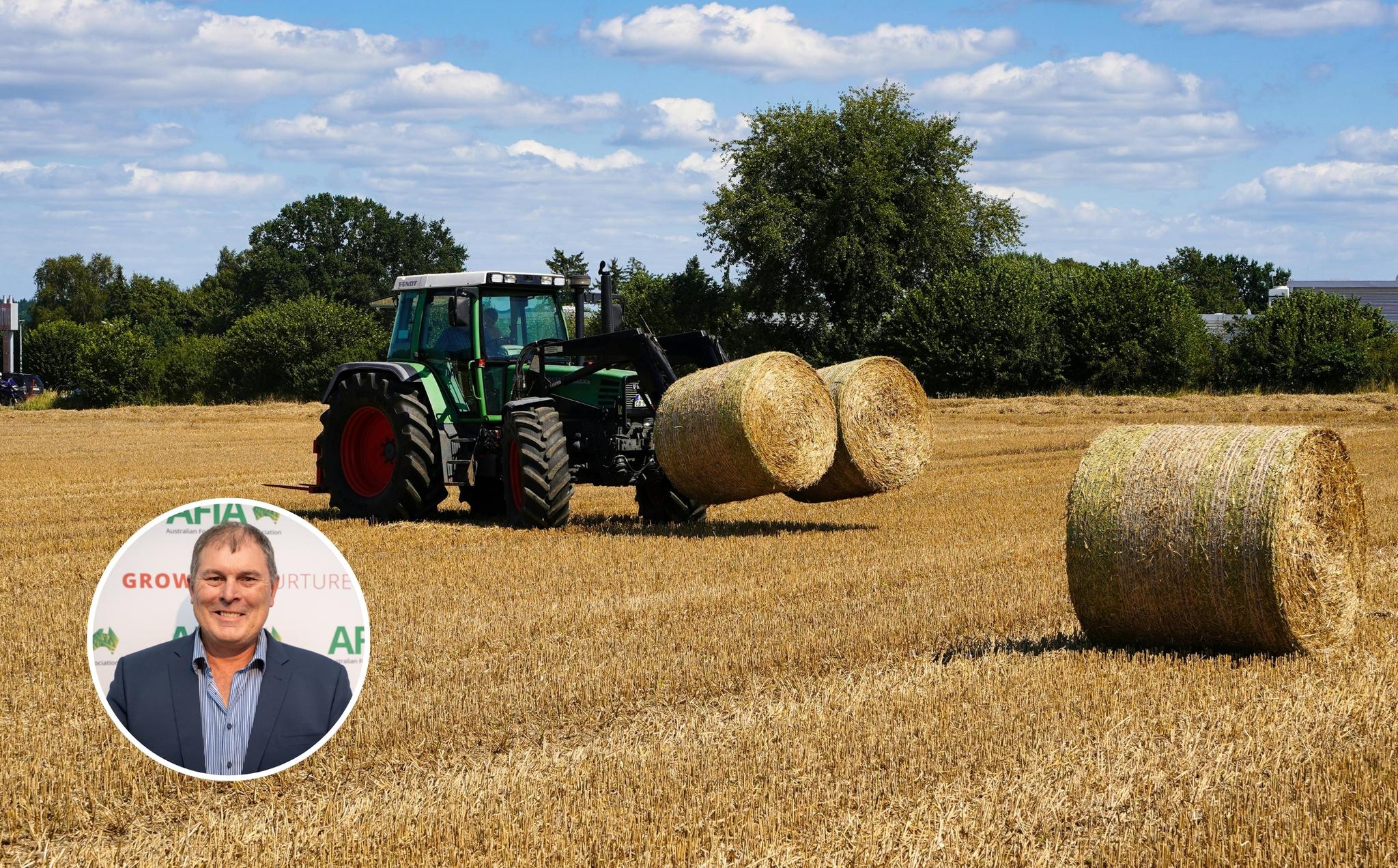
Australian Fodder Industry Association chair Gavin Schuster (inset) farms at Freeling, in the Mid North of South Australia. Picture supplied
South Australian hay growers are heading into this season with paddocks a month ahead and solid pasture cover across much of the state.
It has been a dramatic turnaround after two dry years that chewed through domestic hay stocks.
Australian Fodder Industry Association chair Gavin Schuster, who farms at Freeling, in the state's Mid North, said warm early conditions had driven fast growth, with farmers in many areas saying crops in both hay and grazing paddocks were a month early.
After a dry summer and autumn, average to above average winter rainfall has helped rebuild soil moisture.
In its most recent crop and pasture report, the Department of Primary Industries and Regions (PIRSA) said the rain had significantly improved pasture growth and feed availability, supporting a return to near average feed on offer in many areas.
"As a result, livestock condition has improved with reduced pressure on producers," the report said.
"Follow up rainfall will be critical to maintain pasture persistence, particularly for annual species.
"Despite the improvement, supplementary feeding remains important in some regions as producers cautiously manage recovery following earlier dry conditions."
BIGGER PLANTINGS
Mr Schuster said many mixed farmers and dedicated hay producers lifted plantings earlier in the year after climate agencies declared an El Nino.
"There's a lot of guys who put in a lot of hay because of the fact that there was talk of a super El Nino," he said.
"When it's drought conditions, we need a lot of hay in this country."
At the same time, growers are still dealing with significant carryover of weather-damaged product from last season.
Heavy rain on windrows poised for baling caused much of that hay to be downgraded.
Mr Schuster said he expected "a fair amount of carryover" of second and third quality type hay on the back of subdued demand from the low-grade export market.
It could take several years - or another drought - to move lower quality hay.
"Which is not ideal because at this stage it looks like a bumper crop going to come in and they don't want to put that good hay outside and leave the rubbishy stuff inside," he said.
"It could be a year where the stocks have built up which is fine - we need to build our stocks again - and obviously we're hoping for a dry hay season so we can get some good quality hay back in stock."
WHAT'S GROWING IN THE PADDOCK
Oaten hay remains the backbone of SA hay production and exports, followed by smaller volumes of wheaten and barley hay, plus meadow grass, clover and vetch for domestic livestock markets.
Lucerne was a key irrigated option in the South East where water was available, while vetch hay continued to find strong demand in high-protein dairy rations in Gippsland and south-west Victoria.
During a "normal year" - in the absence of drought in the eastern states - Mr Schuster said most SA hay would be exported, with domestic buyers taking a smaller slice.
Key overseas destinations for SA oaten hay include dairy and beef markets in Japan, South Korea, China, Taiwan, the Middle East and broader south-east Asia.
Domestic demand was spread across lotfeeders, lamb finishers and the relatively small dairy sector in higher rainfall regions such as the Fleurieu Peninsula and South East.
THE OUTLOOK
The immediate outlook is for solid winter growth and rebuilding of fodder reserves, according to a weekly update from ABARES.
The update said this would be supported by rainfall totals of 5-25 millimetres across central and western SA and much of Victoria in early July.
It said pasture growth over the three months to June had been "broadly high" in central and southern areas, although still below average in some northern districts.
Further ahead, the Bureau of Meteorology's long-range forecasts point to a likely El Nino developing.
This was expected to bring a tendency towards below-average rainfall and above-average temperatures across much of South Australia from winter into spring.
Climatologists have stressed that "no two El Nino events are the same" and current outlooks do not yet suggest an extremely dry winter, but they did highlight a growing dry signal later in the season.
OPTIMISTIC BUT REALISTIC
After the frustrations of last year's rain-damaged hay, Mr Schuster said SA producers were hoping for a kinder finish.
"As long as we can get a high percentage of our hay in, which is reasonable quality, most guys would be happy about that," he said.
"Last year when we got 100mm of rain on all the hay when it was ready to bale, that was a bit disappointing. So yeah, we don't want two years of that.
"The trouble is you have a dry finish to the year, and then it damages the grain crops ... you can't seem to get it right both ways."
Even so, Mr Schuster said the mood across the state was "very favourable" at the moment.
"It's probably the best winter we've seen for a few years," he said.
"There hasn't been a monstrous amount of rain. It's just kept nice and damp.
"The weather will do what it wants to ... we'll deal with whatever comes when it comes."
DAS Head of Earth Observation Sam Atkinson said satellite data mapping crop types had shown a gradual trend of SA farmers converting pasture paddocks to cropping during the past few years.
Mr Atkinson said about 50,000ha in 2024 and 54,000ha in 2025, or about 1 per cent of the area under crop, had been planted to pasture in the previous year.
The trend was strongest in the Karoonda East Murray, Coorong and Southern Mallee local government areas, he said.
This article appeared in Stock Journal.
