

Showcasing beauty of wool
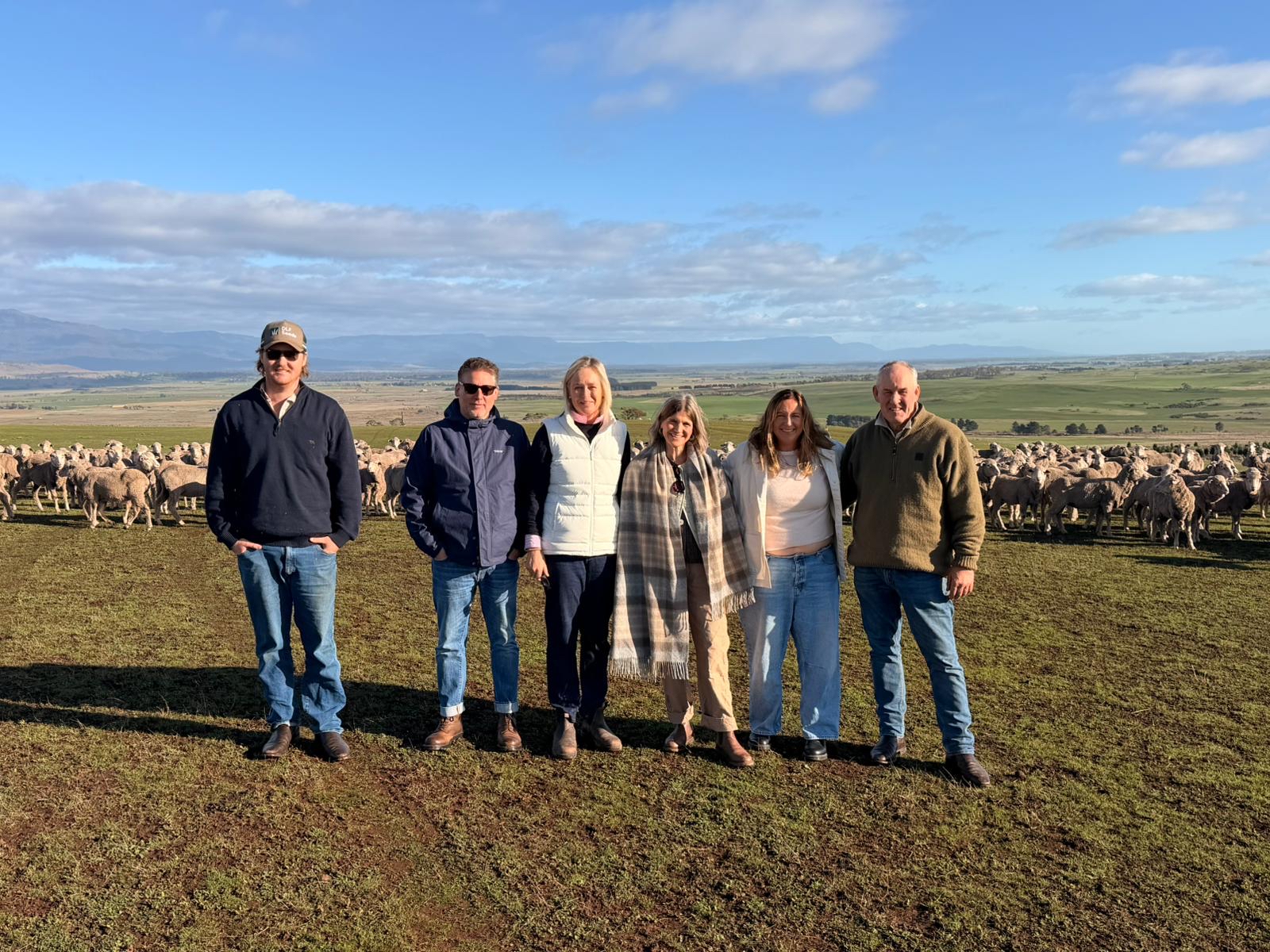
George Taylor (from left), Mark Little, Kate Taylor, Carrie Childs, Sarah Hayes and Gilbert Taylor tour St Johnstone Station, Campbell Town. Picture supplied
Tasmanian fine wool is now firmly on the radar of one of the world's best-known outdoor clothing brands, thanks to a recent visit by senior employees of Patagonia.
As well as allowing Campbell Town producers Gilbert and Kate Taylor to show off the beauty of Tasmania and their wool, it gave them a chance to reflect on how far their sixth-generation merino operation at St Johnstone Station has come.
The Taylors, who run 4000 Merino ewes and 1500 Border Leicester-Merino ewes on 1276 hectares north-west of Campbell Town, hosted three senior Patagonia staff - Mark Little, Carrie Childs and Sarah Hayes - as part of a tour organised by Zentera, formerly The New Zealand Merino Company.
St Johnstone has supplied wool to Zentera for five years under the ZQRX and ZQ+ regenerative and ethical production program, which links growers with brands seeking fully traceable, high-end merino fibre.
Mr Taylor said the visit gave the Patagonia team an introduction to wool production in Tasmania.
"They were very much blown away by the beauty of Tasmania, wool growing and the fibre," he said.
"I don't think they appreciated how wool is produced, and how beautiful a fibre it is, until we showed them."
After a hands-on session in the wool shed, where fleeces were laid out on the classing table, the Taylors took them on a paddock tour to see fenced-off areas and revegetation works.
At one point a mob of around 600 Merino ewes "came to check them out" for a photo opportunity.
St Johnstone focuses on modern superfine merinos rather than traditional Saxon types, targeting 18-18.5 micron wool and averaging about six kilograms of wool per head at shearing each March.
Alongside the wool flock, the Taylors grow cereals, lucerne and grass seed, integrating crops, pastures and irrigation so that "everything's interlinked" in the business.
Their ZQ+ accreditation recognises work across environment, animals and people, including low-stress animal handling, laneways and fencing changes, extensive tree planting and fencing off an ephemeral creek, and long-running engagement with local school students and agronomists around soils, biodiversity and food production.
As custodians of some "pretty beautiful country", Mr Taylor said they saw the visit as encouragement to keep evolving their business while leaving the farm in better order than it was when they started.
The Patagonia team also visited the Greenhills at historic Gala Station, Cranbrook.
This article appeared in Tasmanian Farmer.
