

Tasmania's bubbles reach their bicentenary
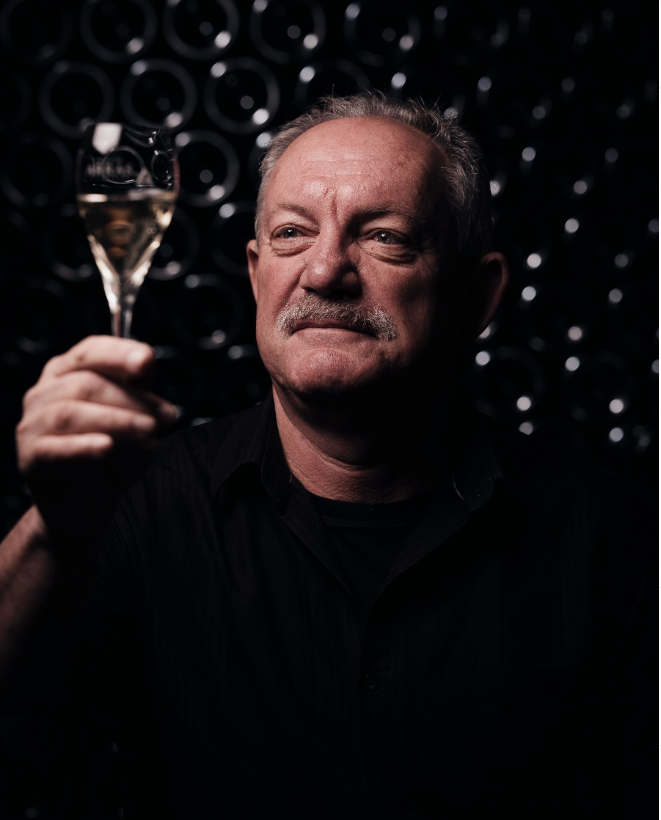
House of Arras chief winemaker Ed Carr was this year named Sparkling Winemaker of the Year for the second time at the International Wine Competition in London. Pictures supplied
When a group of Hobart Town gentlemen gathered to taste a new wine early in 1827, they reached for the highest compliment they knew.
The wine, made by ex-convict Bartholomew Broughton from grapes he had grown at Prospect Farm, New Town, was pronounced "very little inferior to Champaigne".
Van Diemen's Land colonial secretary John Burnett took several dozen bottles for his own table, and he and wine merchant Mr Bryant agreed it was "as fine new wine as either of them have drank for these five years", the Colonial Times and Tasmanian Advertiser reported on February 23, 1827.
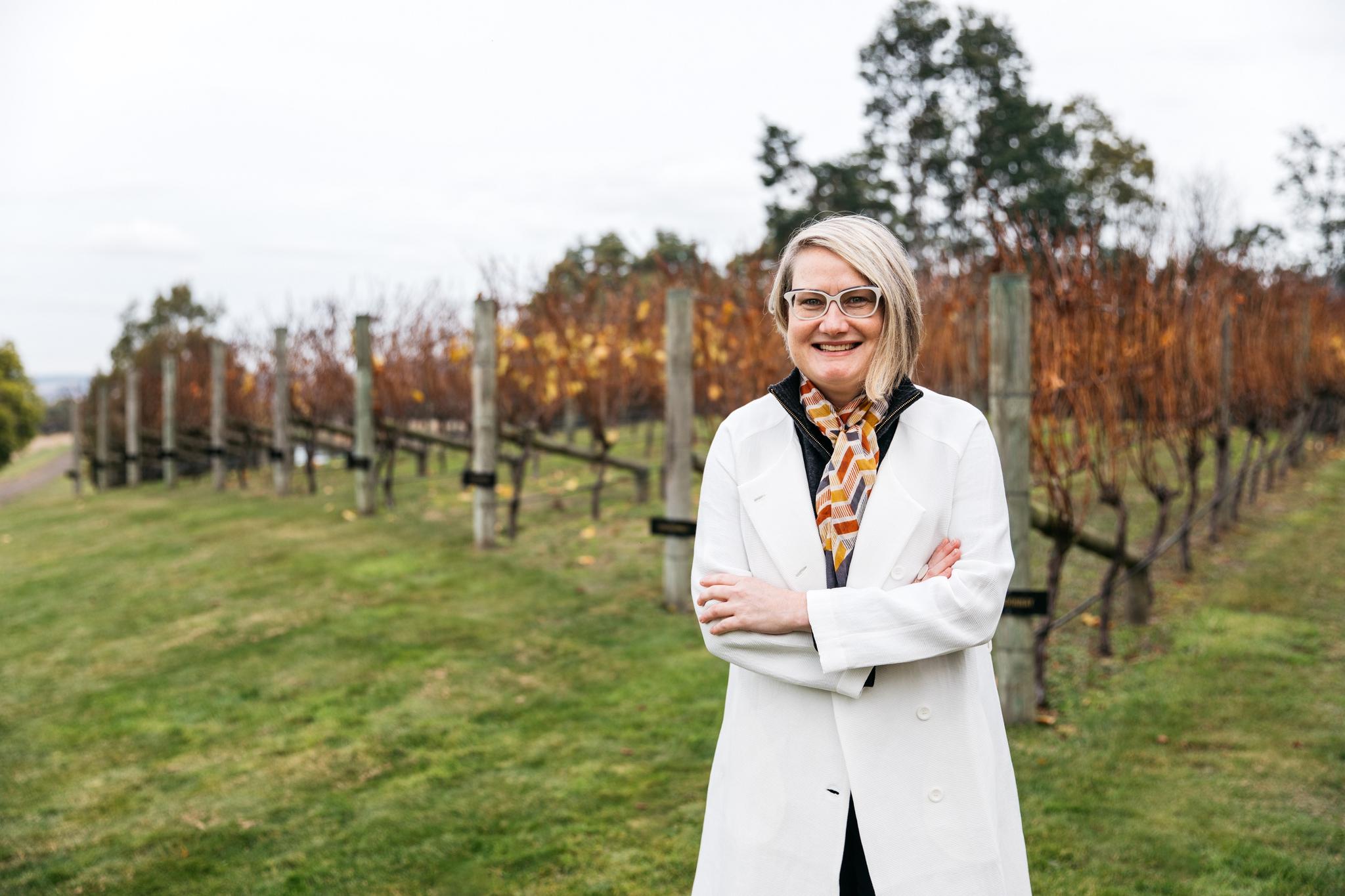
Wine Tasmania chief executive officer Sheralee Davies.
Two hundred years after that 1826 vintage, Wine Tasmania chief executive officer Sheralee Davies said most people did not realise the island was the first place in Australia where a sparkling wine was grown and made.
Ms Davies said Mr Broughton's vineyard, planted on the banks of the Derwent River in 1823, was the colony's first recorded planting, but the anniversary did not mark two centuries of continuous production.
"Vineyards didn't last very long at that time, so we've got that early history, and then we've got the modern Tasmanian wine sector, which is what we're in now," she said.
"We are very fortunate these days to have access to some incredible resources; the skills and knowledge of growers and winemakers continues to grow."
Indeed, House of Arras chief winemaker Ed Carr was this year named Sparkling Winemaker of the Year for the second time - the only non-European to receive the global award - at the International Wine Competition in London.
And House of Arras was awarded Winery of the Year and Sparkling Wine of the Year in the 2027 Halliday Wine Companion Awards.
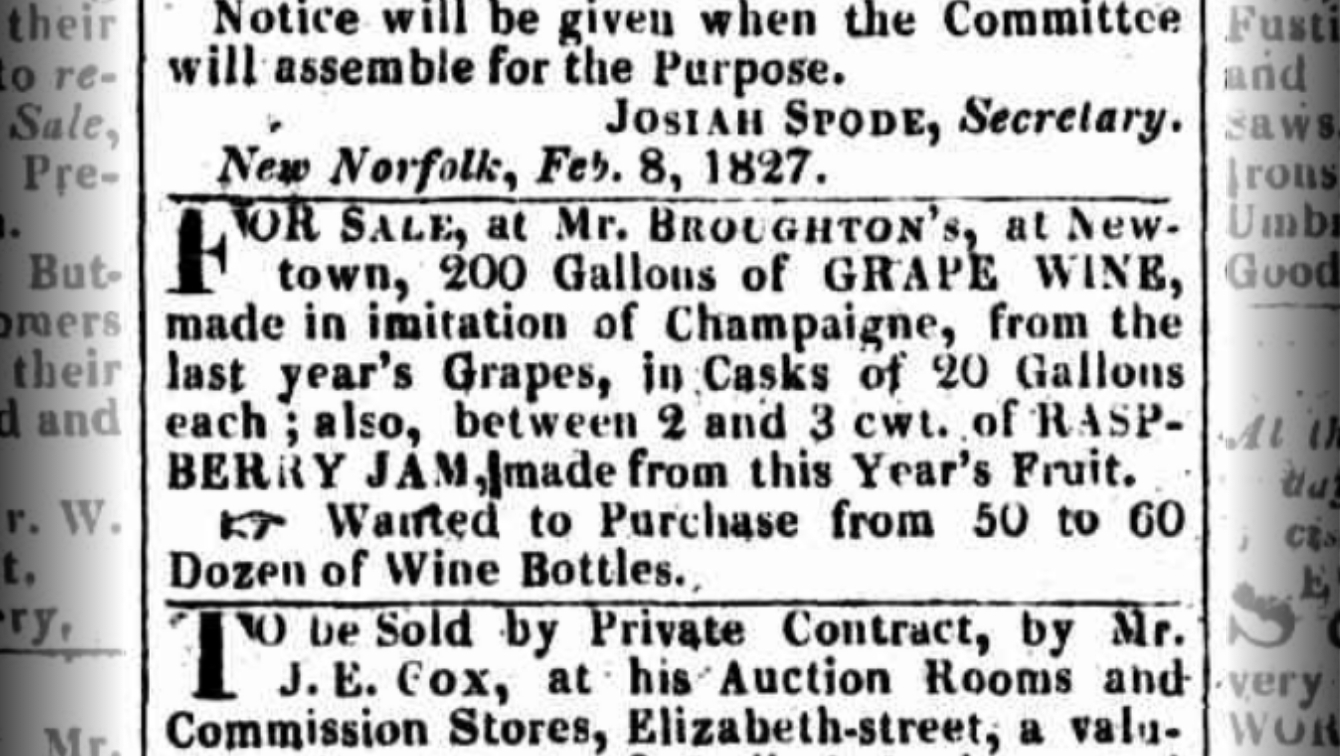
Historian Tony Walker, who in 2014 published Vintage Tasmania: The complete book of Tasmanian wine, said Mr Broughton had advertised his 1826 vintage as grape wine "made in imitation of Champaigne", although the 200 gallons were offered in 20-gallon casks.
"How you can have a sparkling wine in a barrel is beyond me," Mr Walker said.
"But certainly, he was selling it as champagne, or 'sparkling Tasmania', so it must have had some bubble in it."
Mr Broughton's own story ended abruptly with his death at the age of 32 in 1828, just days after buying another property at Cross Marsh.
The fledgling Tasmanian wine industry faded in the mid-1800s as European migrants who understood the craft left for the Victorian goldfields and powdery mildew devastated vines.
Mr Walker said the modern revival and the shift towards sparkling wine owed much to Graham Wiltshire, whose Chardonnay and Pinot Noir struggled to ripen sufficiently for table wines at Pipers Brook, so he decided to try making sparkling wine instead.
The Louis Roederer champagne house took a stake in the venture, and the resulting Jansz Cuvee 1989 - a blend of grapes from 1987 to 1989 released in 1991 - was the first commercial sparkling made as a French-Tasmanian collaboration.
Dominique Portet's Clover Hill and Dr Andrew Pirie, of Apogee, soon followed and sparkling wine, mostly made from Pinot Noir and Chardonnay, now accounts for 41 per cent of Tasmania's harvest.
Despite the cool maritime climate, which Ms Davies said was perfect for delivering amazing sparkling wines, production fluctuates with the weather.
A windy, wet and cool spring during flowering cut yields, and a mild summer pushed some harvests four weeks later than usual.
The 2026 vintage of 11,163 tonnes of grapes was less than half of 2025's record crop of 23,002 tonnes.
Queensland-based wine writer Tyson Stelzer, a former International Champagne Writer of the Year, said the small vintage was both "a blessing and a curse".
It eased fears of a glut after strong plantings, and non-vintage blending would smooth supply, but it was tough on those growers who were paid by the tonne.
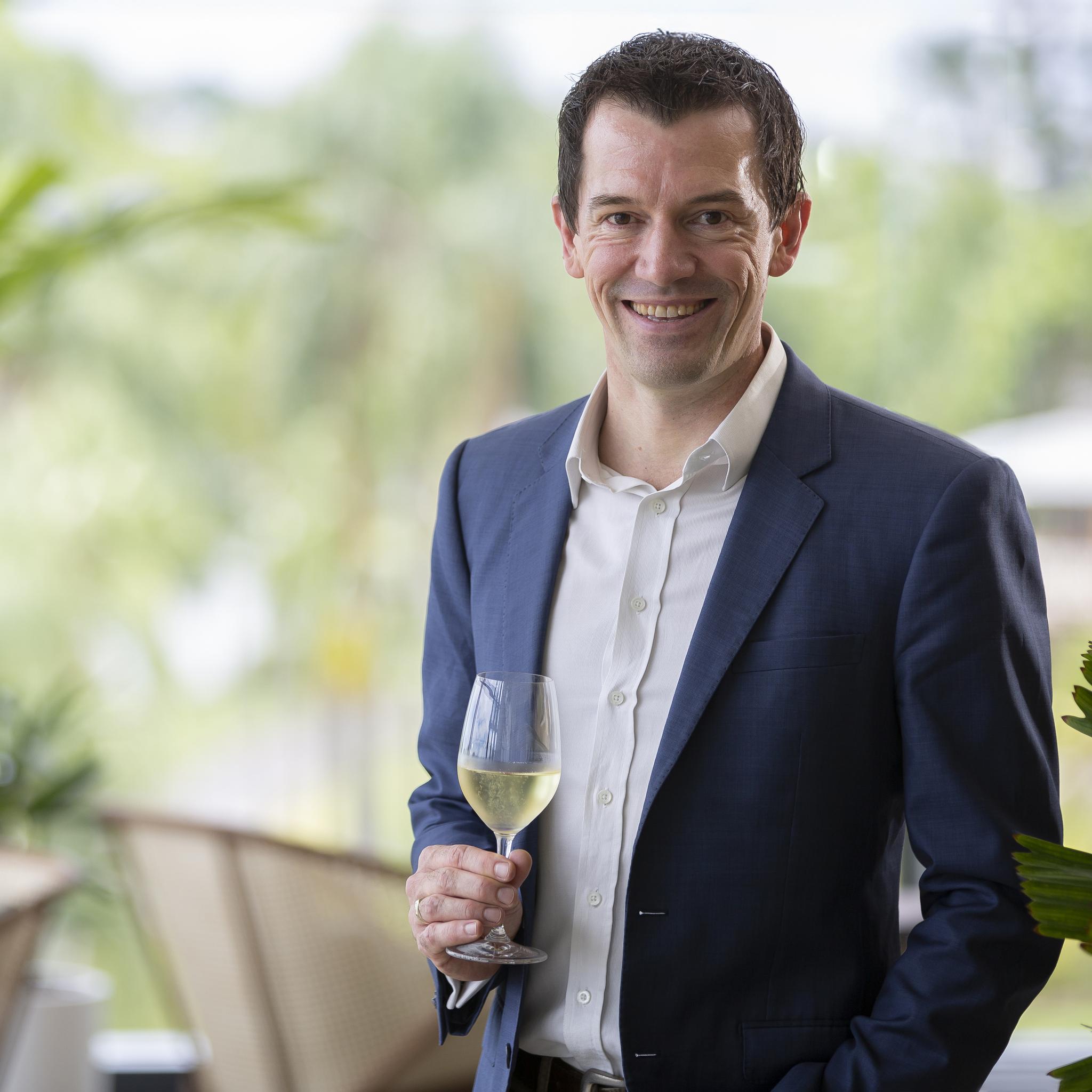
Award-winning wine writer and sparkling wine specialist Tyson Stelzer.
Mr Stelzer is such a fan of Tasmanian sparkling wines that he has hosted tastings in San Francisco, New York, London and Hong Kong, where audiences have responded with "absolute awe and amazement".
"We just love Tasmanian sparkling so much in Australia, we drink it all here," he said.
"Very little of it actually gets out of the country, so these markets are not aware of how incredible these wines are because they simply don't have the access.
"I love to champion sparkling wines from Tasmania ... because I'm a critic and they happen to be excellent."
Despite a global trend away from drinking wine - mainly affecting reds - Mr Stelzer said sparkling wine was still in a growth cycle and the bicentenary was a milestone well worth celebrating.
"It's such a wonderful thing to see the way in which the Tasmanian winemakers are embracing what is sometimes a temperamental Mother Nature to produce ... some of the greatest wines in the world," he said.
To mark the occasion, Dr Pirie will host a tasting event on November 15, Apogee Sparkling and the Art of Time, and feature museum wines at the Golconda Road, Lebrina, cellar door on November 14 and 15.
This article first appeared in Tasmanian Farmer
