

Tough season throws up a reality check for St George cotton growers
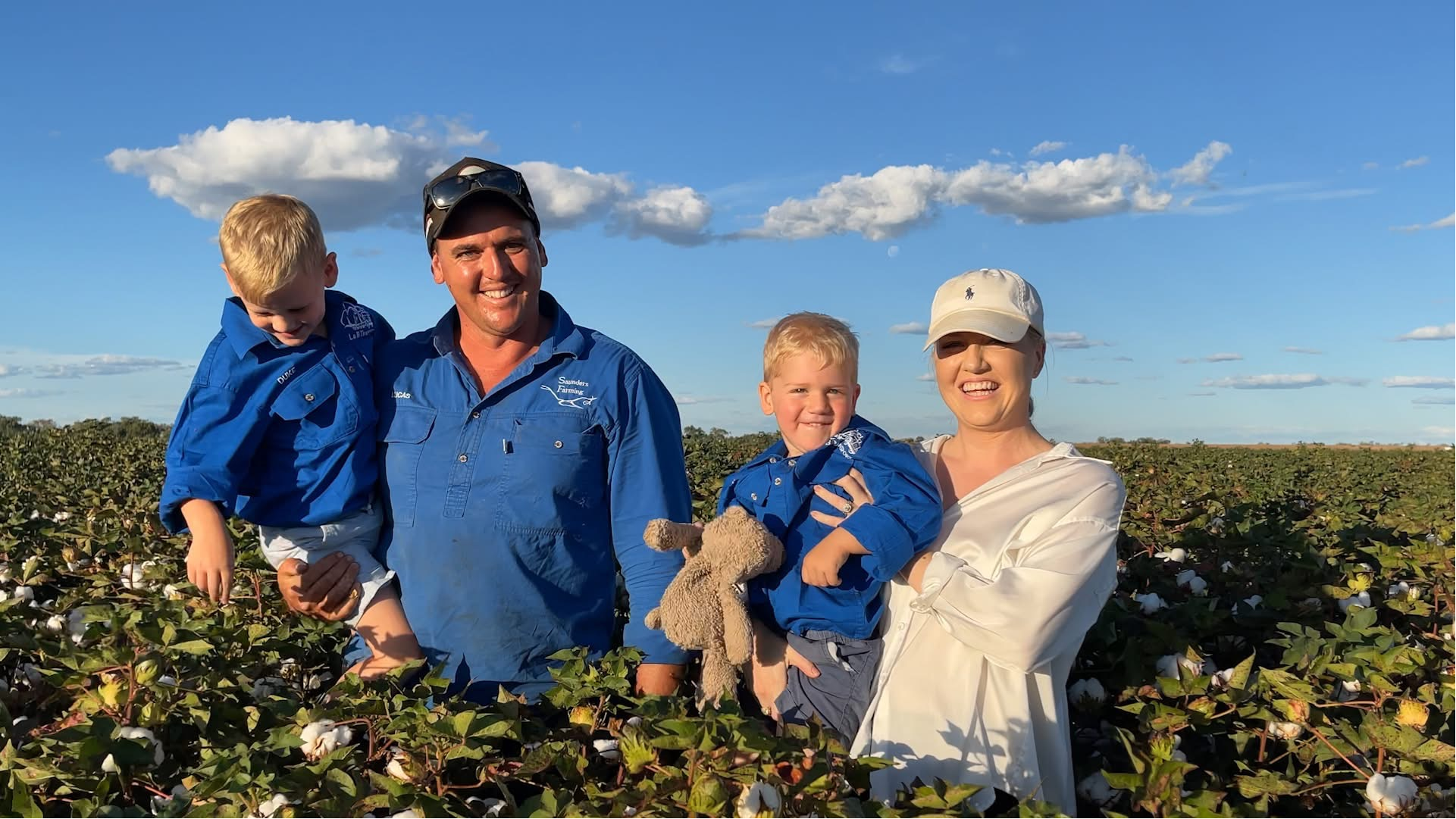
Lucas and Brooke Wuersching with sons Duke and Ronix in a cotton field at Bundoran, southeast of St George. Pictures supplied
First-generation St George cotton grower Lucas Wuersching has come off his toughest season since going out on his own in 2022.
A combination of extreme heat - including 106 days over 35 degrees and 10 days above 40 degrees in January - accompanied by higher than usual evaporation, and damage from two hail storms punished his fourth crop.
"We planted too much," Mr Wuersching said.
"I took a bit of a punt. Everyone was talking up a wet winter, and it didn't come through, and we had the extra heat on top, which made us use more water, so we were probably about a water and a half to two waters short."
Mr Wuersching and his wife Brooke lease Bundoran - also known as Wuersching Acres - southeast of St George.
About 580 hectares is set up for irrigated summer crops of cotton, and occasionally mungbeans, with 250ha used for dryland winter crops of wheat and barley.
Mr Wuersching said the drier climate - average annual rainfall is 498mm - meant disease was less of a problem than in some other regions, so it was more common to grow back-to-back cotton when irrigation water was available.
Preparation for the 2025-26 crop started straight after the previous harvest, with mulching and root cutting the stalks, followed by a pass with a Horsch Tiger.
The fields were left to rest, then spread with a starter blend of fertiliser containing 30 per cent urea at 450kg/ha in June-July, before furrowing and pulling up beds, and making a pass with a cultipacker tyne machine followed by a roller.
The 495ha crop was planted in late September-early October on one metre row spacings at 13-14 seeds per metre, with a pre-emergent herbicide applied behind the 12m John Deere ExactEmerge planter, before flushing up within days.
Mr Wuersching opted for four fields of Sicot 606B3F and one field of Sicot 748B3F "to keep the 606 honest".
About 350kg/ha of urea was spread and cultivated in-crop twice.
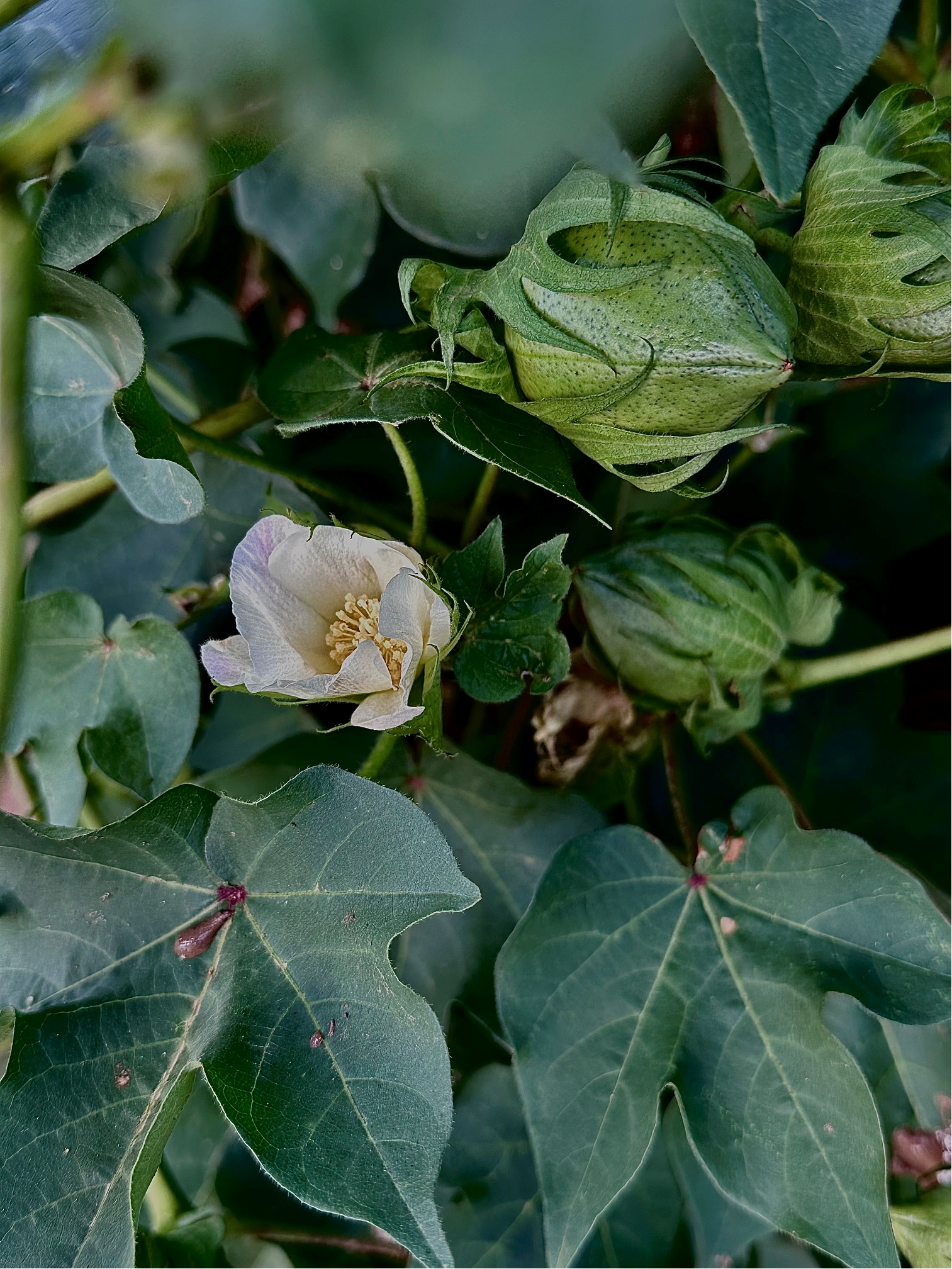
Cotton just before boll spit in February.
Irrigation water for Bundoran is sourced from the Beardmore Dam and they are licensed to harvest overland flows from the Balonne River, with 2400 megalitres of on-farm storage.
Crops are irrigated using half bankless and the other half with through-the-bank pipes (TBPs).
Mr Wuersching, who cut his teeth working for his father-in-law Craig Saunders, at nearby Plantation, before the couple struck out on their own, said TBPs had improved watering speed and yields, but bankless irrigation had delivered major gains in labour and water efficiency.
He estimates machinery and labour savings of about 30 per cent from eliminating siphons, shovel work and much of the time spent moving rotor bucks.
"Bankless has been a big game changer for us," he said.
"There's lots of benefits there. I could go on for hours about it."
This season also marked the first full commercial run of automated irrigation using Agri-Mation units developed by Mr Saunders and partner Grant Oswald.
Fitted to head ditch and tail-drain gates, the units can be controlled remotely by phone or programmed to operate automatically based on time or tail-water levels using a LoRa wireless network.
"The bankless is great, but you've got to be there at different times to do different things," he said.
"It can interrupt your sleep, and driving home tired is not the best, so you end up laying your seat back. This last season, I didn't sleep in my car once, so I am loving it."
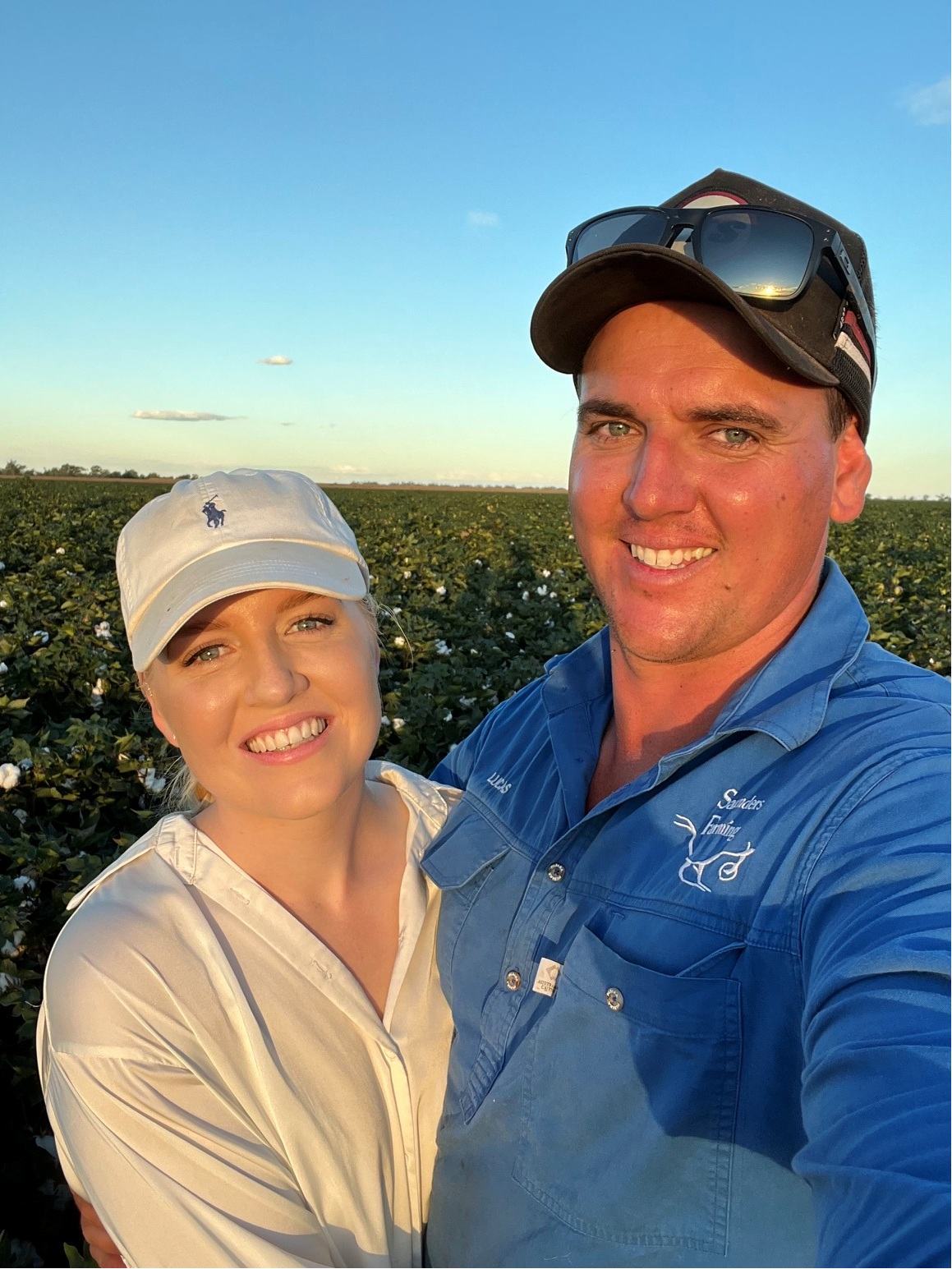
Brooke and Lucas Wuersching lease Bundoran, southeast of St George, where they grow irrigated cotton and dryland winter crops.
Mr Wuersching budgets on 8.5 megalitres of water per hectare of cotton grown in fields equipped with bankless, and 10 megalitres for the rest.
Weed and pest pressure were low. The crop received two Roundup sprays and a late season application of Dual Gold to manage weeds such as nut grass and sesbania, and one hit with Regent for silverleaf whitefly.
The first desiccant spray was applied in mid-February and a contractor picked the crop across 10 days in early March.
Average yield came in at 11.77 bales per hectare, well below the 15 bales/ha achieved in previous seasons and short of the 14 to 14.5 bales/ha reported elsewhere by growers who were able to fully water their crops.
The hailstorms, one before Christmas and another in late January, had stripped squares and damaged bolls, while the hot finish reduced boll size and weight.
Yet the crop came tantalisingly close to another standout year. In sections where the last dregs of water from storage were pushed across the tops of fields, yields reached 13.5 to 15 bales/ha.
The modules were sent to the LDC gin, Mungindi, for processing.
Despite the disappointment, Mr Wuersching is looking forward to the coming season.
March rainfall events of 180-210mm on the Western Downs topped up Beardmore Dam nicely, and put flows into the Balonne River, which allowed nine days of pumping to on-farm storage.
"This has made our lives really nice for next year, because we've actually got some water, which a lot of places don't," he said.
"If we were planting today, I'd probably put in 350ha ... but I'm going to try and learn my lesson. So at this stage with the water I have and, if it's going to be a dry winter, by the time it evaporates I'll have enough for about 300ha.
"I've been pretty ballsy the last few years, going pretty hard, and this year's put me back in a bit of reality, which I needed.
"It's growing cotton, and we're in St George, so you've got to expect these things.
"I would like a perfect year next year, but who knows? We will just do our best. We do what we can and leave the rest up to the weather."
A finalist for the ADAMA Chris Lehmann Trust Young Achiever of the Year at the 2022 Australian Cotton Industry Awards, Mr Wuersching has been named a finalist in the Cotton Australia 2026 Bayer Cotton Grower of the Year and the AgriRisk High Achiever of the Year awards to be announced at the Australian Cotton Conference in August.
This article appeared in Australian Cotton & Grains Outlook
