

WA bees boost ranks for SA almond pollination
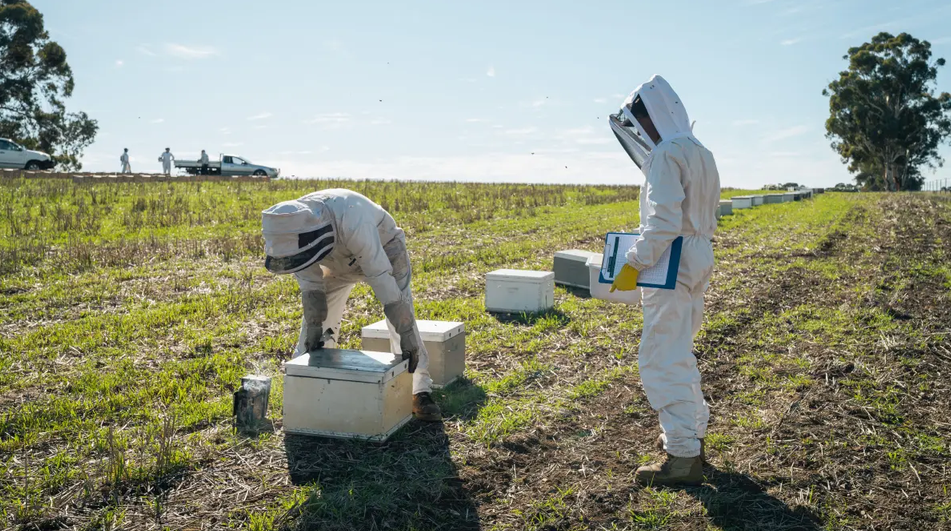
Hundreds of thousands of bee hives have been trucked to almond growing regions of NSW, South Australia and Victoria for the annual pollination season.
For the second year their numbers have been bolstered by hives from Western Australia, as growers move to ensure they have access to sufficient healthy bees to pollinate their crops
Road trains carried about 7500 hives across the Nullarbor Plain to Select Harvests almond orchards in the SA Riverland in July.
The
non-stop journey of almost 3000km was the culmination of months of
planning as the parasitic varroa mite continues to decimate hives across
the eastern states.

WA beekeeper and queen breeder Steve Sammut unloads beehives at Jerramungup.
Select Harvests then-CEO David Surveyor flagged the operation in an investor briefing last November, saying the company had sourced some hives from Queensland and WA in 2025, and was preparing to buy bees for 2026.
"We historically have not been a bee owner, but we are trying to source bees out of Western Australia as the majority of those bees so that we can bring them to South Australia and ensure that we're protected for the coming season," he said.
"There's a lot of activity going on around bee management to ensure that, because the effect of not having bees is a major event for Select Harvests and in fact, any almond growers because it means you won't be able to pollinate across your various varieties."
Without access to enough hives, almond growers risk yield losses of up to 100 per cent in traditional varieties.

WA beekeeper and queen breeder Steve Sammut with hives at Cervantes, WA.
WA queen breeder Steve Sammut, who helped co-ordinate the mammoth undertaking, contributed 1140 of the hives.
Mr Sammut declined to name the grower or say how much the WA beekeepers were paid, but media reports suggest it was about $350 a hive, making the total bill more than $2.6 million.
But that doesn't include the cost of boxes, frames, pallets, local wax, inspections, logistics and transport which were also covered by Select Harvests.
The grower's identity was an open secret across the industry, especially after an ad appeared in the July edition of the Australian Bee Journal seeking expressions of interest from beekeepers willing to partner with Select Harvests and lease or buy the hives.
Mr Sammut said the deal had overall been positive for WA beekeepers, many of whom had come through a tough season, giving them a chance to diversify income beyond honey and queen sales.
"We got to invoice a deposit before we even started work," he said.
"It was a leg up ... they were supportive of the beekeepers the whole way through in financing it."
The only downsides were the unexpected rise in fuel prices, and having to put queen bee sales on hold for his regular customers.
"I apologised on the radio the other morning and I'd like to apologise publicly once again," he said.
To produce the 10-frame single boxes that headed east, Mr Sammut diverted queens from his normal breeding program and used 400 nucleus colonies as a base.
He split and built up colonies in both his production hives and the grower-owned boxes until they met specifications.
"We kept notes on the lid ... I think we got up to 10 splits out of the original boxes we populated of theirs," he said.

Checking the health of hives at the Donnybrook, WA, collection point.
Mr Sammut's hives were collected from Jerramungup, while other hives were taken to collection points at Donnybrook, Gingin and Esperance where they were inspected by WA Department of Primary Industries and Regional Development staff and auditors, before being loaded onto road trains contracted by Select Harvests.
A SA Department of Primary Industries and Regions spokesperson said about 8185 hives from 25 WA beekeepers had been granted Apiary Health Certificates and moved into SA by early August.
Another five certificates and permits covering about 3300 hives had been issued for movements from Queensland, NSW and Victoria.
The parasitic mite has devastated both managed and feral hives across the eastern states since it arrived in NSW in 2022, and the federal government declared eradication impossible in 2024.
Varroa was detected in South Australia in September 2025, leaving WA and Tasmania as the only varroa-free states.
This article appeared in Good Fruit & Vegetables magazine.
